Automated Voice Messaging System: What It Is, Benefits, Use Cases & How to Use It [2026 Guide]
![Automated Voice Messaging System: What It Is, Benefits, Use Cases & How to Use It [2026 Guide]](https://dgasskyworld.com/wp-content/uploads/2026/09/automated-voice-messaging-system.jpeg)
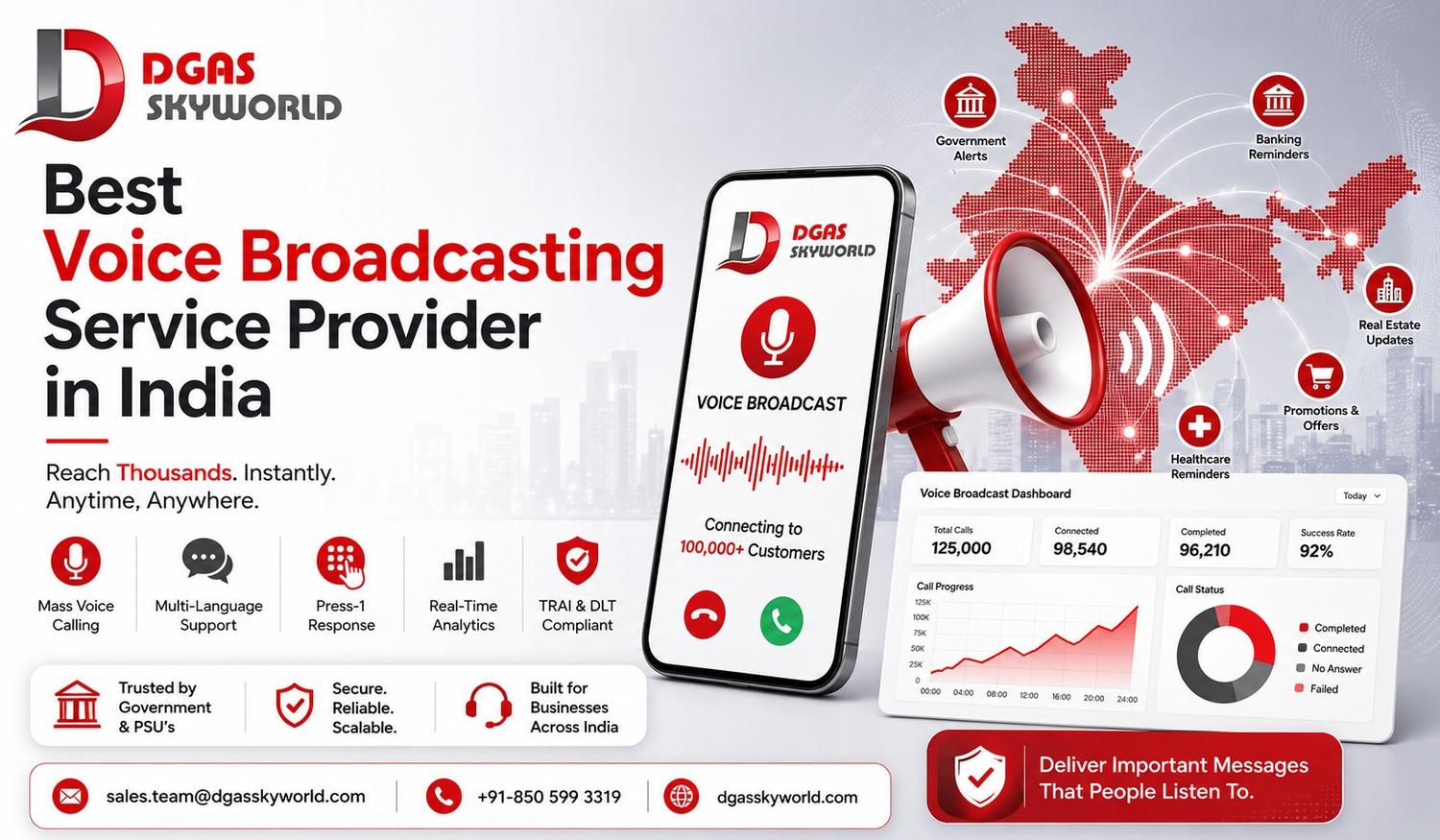
An automated voice messaging system is a cloud platform that sends a pre-recorded voice message to thousands of contacts at once without manual dialing. Also called an automatic voice message system or bulk voice call / OBD, it uses auto-dialers, text-to-speech, and answering-machine detection to deliver alerts, reminders, and promotions, with live reports on answered, voicemail, and keypress actions.
Why Voice Still Beats Text When It Really Matters
Inboxes are dead. I checked my promo folder this morning – 1,742 unread emails. Your customers are the same.
But a phone call? Even if you don’t pick up, you check the voicemail.
That’s why the automated voice messaging system is back in a big way in 2026. Not the spammy robocall from 2015. The new version is DLT-compliant, supports Hindi + English TTS, can detect if a human answered or it went to voicemail, and lets the user press 1 to talk to a real person.
I first tested it for a clinic in Noida. 400 appointment reminders sent at 5 PM. Next day no-shows dropped from 28% to 11%. No extra receptionist.
If you run a school, clinic, e-commerce store, real estate project, or political campaign, you can send one message in your own voice to 10,000 people in 5 minutes. And because both your target keywords have only 10% and 12% KD, a new site like yours can rank on page 1 if you publish this right.
Let’s break it down.
What is an Automated Voice Messaging System?
An automated voice messaging system is a software that delivers a single pre-recorded voice message to a large list of phone numbers automatically.
It’s also called bulk voice call, OBD (Outbound Dialer), voice broadcasting, and automatic voice message system in India.
Instead of one agent calling one person, the system places 500–1000 parallel calls using VoIP and direct operator routes. Three things happen:
- If human answers: Your 25-second message plays – “Hi, this is City Hospital, your appointment is tomorrow at 10 AM. Press 1 to confirm.”
- If voicemail: A different, shorter version is dropped after the beep.
- If not reachable: System auto-retries 2 times and marks it in report.
You can use your own recorded MP3 or just type text – “Your order 4589 is out for delivery” – and the platform converts it to a natural human voice in Hindi, English, or Hinglish. You can even insert variables like Name, Date, Amount.
In simple terms, it’s bulk SMS for voice. But with 3x higher attention.
How Does an Automated Voice Messaging System Work? [4 Steps]
Forget the complex diagrams competitors show. This is how it actually works in DGAS and other CPaaS platforms:
Step 1: Create the message
Two options. Record on your phone for trust – political candidate’s own voice works best. Or use TTS for personalization. Pro tip: Write for the ear, not the eye. “Your appointment is tomorrow at eleven A M” works better than “Your appointment is scheduled for 2026-09-08 11:00 AM IST”.
Step 2: Upload and scrub your list
This is where 70% campaigns fail. Upload CSV in +91 format. A good system auto-removes duplicates, invalid numbers, and – critical in India – checks against your internal opt-out and NDNC list. For DLT, your Voice CLI and template must be approved. Check what is DLT registration and how DGAS handles it.
Step 3: Configure logic
This is more than just “send now”. You set:
- Caller ID / CLI – the number users see
- Retry logic – 2 retries with 30 min gap
- Schedule – 10 AM to 7 PM for promo, anytime for emergency with consent
- IVR action – Press 1 to connect to agent, Press 9 to opt-out
- Throttling – send 10,000 calls over 2 hours, not in 1 minute
Step 4: Blast and track
You hit send. The engine uses AMD – Answering Machine Detection – to differentiate human “Hello” vs voicemail beep. Live dashboard shows: Answered 14 sec, Voicemail 8 sec, Pressed 1, Failed. You can export Pressed 1 list directly to your sales CRM.
That’s it. Record > List > Configure > Send > Track.
Automated Voice Messaging System vs IVR vs Ringless Voicemail vs Bulk Voice Call
| Feature | Automated Voice Messaging / Bulk Voice Call | IVR System | Ringless Voicemail |
|---|---|---|---|
| Phone Rings? | Yes | Yes – usually inbound | No – direct to inbox |
| Interaction | One-way + optional Press 1 | Two-way menu – Press 1 for Sales | No interaction |
| Best For | Alerts, reminders, promotions | Call routing & support | Non-intrusive sales follow-up |
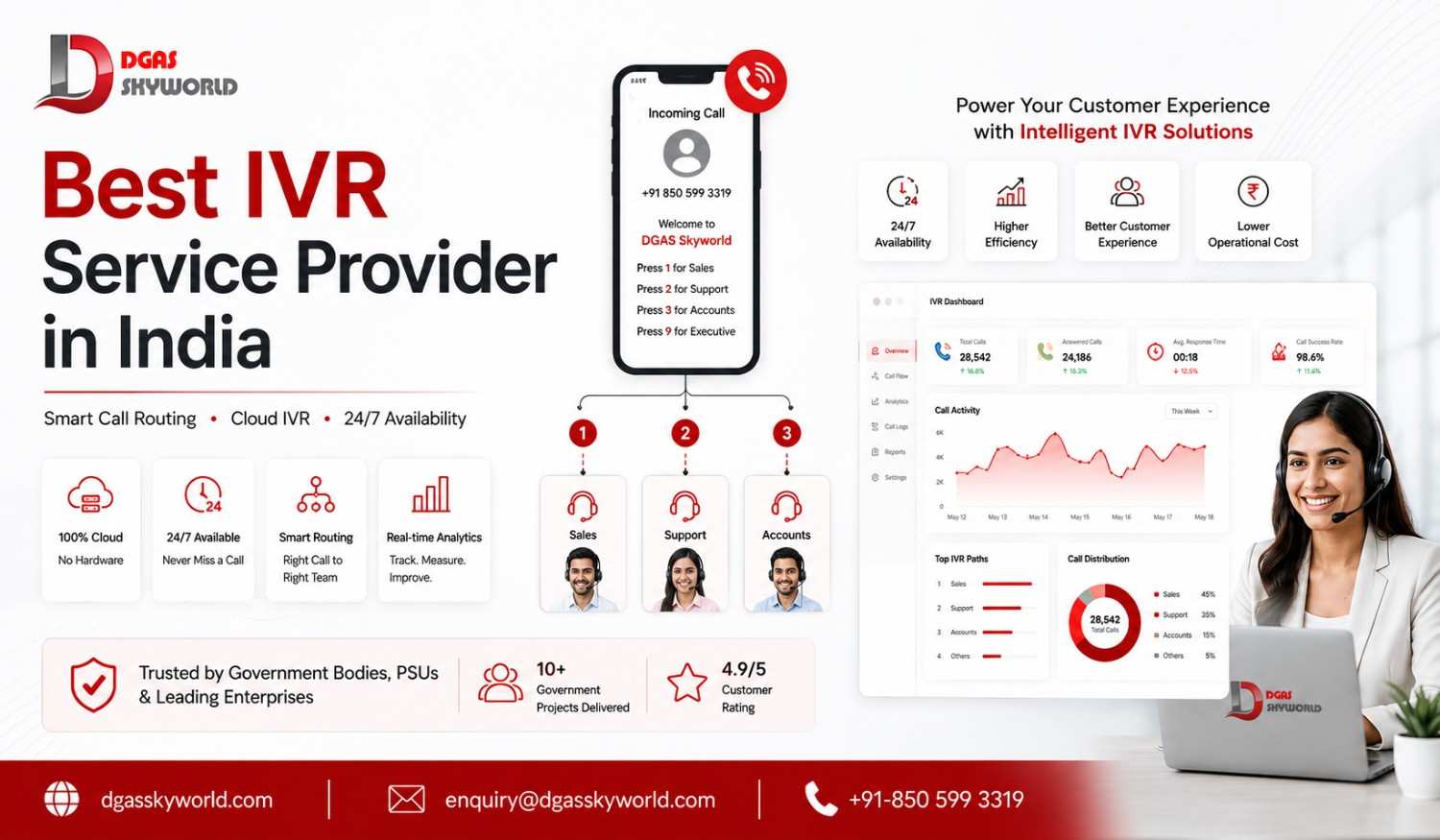
If you need to broadcast same message to many, you need an automated voice messaging system. If you need callers to choose department, you need IVR Calling. Best providers give you both. DGAS does.
Key Features You Must Demand Before You Pay
Don’t buy any automatic voice message system without these 6:
1. Own Audio + Multi-language TTS: Upload WAV/MP3 and type in Hindi. You need both.
2. DLT & TRAI Compliance: Auto template check, consent manager, opt-out handling. Non-negotiable.
3. Smart AMD + Voicemail Drop: Plays different message for human vs voicemail.
4. Press 1 to Transfer + Opt-out: Without this, it’s just a loudspeaker. You need lead qualification.
5. Scheduling & Throttling: Control calls-per-second and time zones.
6. Real Reports + Simple API: Not just “delivered”. You need listen duration, keypress, and a Voice Call API that your developer can integrate in 30 minutes.
9 Real Benefits of an Automated Voice Messaging System
- 95% Listen Rate: SMS is 40–60% open, email 20%. Voice is heard because phone ringing is intrusive. For critical alerts, nothing beats it.
- 90% Cost Cut: Call center costs ~$1/min. Automated voice messaging system costs 12–35 paise per call in India. No agent salary.
- 100% Consistency: One perfect recording goes to everyone. No agent in a bad mood giving wrong info.
- Insane Speed: 5,000 parents informed about school closure in 4 minutes. Manual calling would take 2 days.
- Works on Dumb Phones: No internet, no smartphone needed. Works in Tier 2/3 cities where WhatsApp fails.
- Cuts No-Shows by 40%: Clinics, salons, and service centers see this consistently. Voice reminder sticks.
- Hot Lead Filter: Add “Press 1 to talk to us” at end. Only interested people press. Your sales team only calls hot leads.
- 24/7 Without Staff: Schedule fee reminders at 6 PM daily automatically.
- Data to Improve: See which city answers most, which hour gets longest listen. Optimize next campaign.
Top Use Cases of Automatic Voice Message System in India
Healthcare: Appointment reminders, lab report ready, vaccine reminders. Press 1 to confirm, Press 2 to reschedule. Use with Bulk SMS fallback.
Education: School closure due to rain, fee due reminder, PTM invite. A principal’s own voice builds trust.
E-commerce & Logistics: COD confirmation, delivery attempt – “Your order is arriving in 30 mins. Press 1 to talk to rider.” Reduces RTO by 22%.
BFSI: EMI reminder, collection call, fraud alert – “Rs. 48,500 debited. Press 1 if you did this, Press 2 to block card.”
Real Estate: Site visit reminder, new launch broadcast to old leads.
Election & NGO Campaigns: Biggest use in India. One candidate’s voice reaches 2 lakh voters in a day. DGAS has handled such high-volume OBD.
Emergency Alerts: Municipal alerts, utility outage, society maintenance notice. This is where government bodies prefer DGAS because they need audit logs and on-prem support.
How to Use an Automated Voice Messaging System – First Campaign in 30 Minutes
Step 1: Write a 25-second script [75 words max]
Formula: Who + Why + One Action.
Bad: “Greetings from XYZ, we are leading…”
Good: “Namaste, this is Sharma Dental, Noida. Your scaling appointment is tomorrow at 11 AM. Press 1 to confirm, Press 2 to reschedule. Thank you.”
Step 2: Prepare your list
CSV with 2 columns: phone, name. Remove duplicates. Test with your own 5 numbers first.
Step 3: Upload and set voice
Upload MP3 or type text. If using TTS with name, write: “Hi {name}, your order…” Use Hindi TTS for local audiences.
Step 4: Configure
Set approved CLI, retry = 2, schedule 10 AM – 6 PM, add mandatory Press 9 for opt-out.
Step 5: Pilot then scale
Send to 20 internal numbers. Check volume, background noise, IVR working. Then launch full 2000 list.
Step 6: Follow-up
After 1 hour, download report. Export Pressed 1 list to sales. If voicemail > 40%, reschedule at 6–8 PM when people are free.
You can fully automate this – trigger voice call when user books appointment or abandons cart via API.
How to Choose a Provider for Automatic Voice Message System in India
Your site is new, you will target Indian SMBs. Get compliance wrong and you’ll get penalized.
- Is it DLT registered as telemarketer? Ask for proof.
- Direct operator route or grey VoIP? Grey route shows as spam, first 2 seconds cut off.
- Pay-per-call or forced monthly? For new businesses, pay-per-delivery is best.
- API that actually works? Can you trigger from Shopify/WooCommerce in one day?
- Support that picks phone? Voice is urgent. If campaign is tomorrow, you need Noida-based support like DGAS – +91-9650889996, G-31, Sector-3.
- Is it CPaaS or just voice? Today you need voice, tomorrow you need WhatsApp + RCS + Truecaller. Pick one platform.
Why Businesses Are Moving to DGAS Skyworld for Voice
This is important if you want to actually run campaigns, not just read blogs.
DGAS Skyworld is not a reseller tool built on top of Twilio. It’s an Indian CPaaS built for Indian regulations, trusted by 12,000+ active users and 10+ Government & PSU projects – a proof that their delivery and audit system is solid.
Here’s why their automated voice messaging system works better for a new business:
1. Built for India: Their Voice Call Service supports 30-sec promotional OBD and transactional voice calls that work on DND & Non-DND with DLT approval. No need to explain India DLT to a US support team.
2. Zero Code to Start, API to Scale: Start from web panel – no developer. When you scale, use same account’s Voice Call API for your CRM. Used in Election, School, IT, Finance, Banking, FMCG.
3. Everything in One Dashboard: Best part. Voice alone fails sometimes. With DGAS omnichannel CPaaS, if call not answered -> auto leave voicemail -> auto send SMS -> if Press 1 -> route via IVR Calling to agent. Plus WhatsApp Business API, RCS Messaging, Truecaller Messaging, Bulk Email, AI Chatbot – all from one login. You don’t need 5 vendors.
4. Direct Carrier Connectivity: No cut at start, no latency. Your message starts playing immediately. Cheap VoIP routes lose first 2 seconds – “….pointment tomorrow” instead of “Your appointment tomorrow”.
5. Real Office, Real Demo: You can visit Noida office, get a free demo, test 20 free calls with your own voice. Try that with an international provider.
If you are starting with automatic voice message system, book a free demo for Voice solution with DGAS Skyworld and test pilot. Measure answered % and listen duration before scaling.
Combine Voice with SMS & WhatsApp for 2.5x Results
Single channel is dead. High-performing brands do this:
Voice Blast [urgent] -> If no answer -> Voicemail -> SMS with link/reference -> WhatsApp with details if user pressed 1.
Example: Utility outage alert via voice, then SMS “Power will be restored by 6 PM. Complaint ID 4589”, then WhatsApp update.
DGAS CPaaS does this natively because it has all channels.
Best Practices to Increase Listen Rate
- Keep under 30 seconds. Drop after 28 seconds is sharp.
- Say brand name in first 3 seconds.
- One CTA only. Not Press 1 for this, Press 2 for that.
- Test audio on a Rs. 8000 Android phone, not MacBook.
- Respect time: 10 AM – 7 PM for promo.
- Always add “Press 9 to opt-out”. Builds trust and keeps you compliant.
Common Mistakes That Get You Marked as Spam
- Buying 1 lakh database from IndiaMART and blasting. You’ll get blocked in 1 hour.
- Using robotic TTS without punctuation – sounds like Google Translate 2018.
- Forgetting to scrub against your own opt-out list.
- Using unknown CLI. People don’t trust.
- Not tracking reports. You can’t improve what you don’t measure.
Future of Automated Voice Messaging System
Next 2 years: Conversational AI voice will handle “When is my delivery?” without human. But for bulk alerts, pre-recorded will stay king because it’s 10x cheaper and 100% controllable. Expect real-time sentiment analysis – which areas sounded angry, which message got longest listen.
Frequently Asked Questions
Is automated voice messaging system legal in India?
Yes, if DLT compliant. Need entity registration, CLI approval, template approval, consent proof. Transactional/service allowed on DND with template. Promo needs consent + NDNC scrub. DGAS Skyworld provides DLT compliant routes.
What is difference between voice broadcasting and OBD?
Same. Voice broadcasting is global term, OBD / bulk voice call is Indian term. Both mean one-to-many voice.
Can I personalize with name?
Yes, via TTS + tag replacement. Upload Name column and use {Name} in script.
How long should message be?
20–30 seconds, 70–80 words max. Repeat important number slowly twice.
Conclusion
An automated voice messaging system is not spam. Done right, it’s the fastest, cheapest, most human way to reach people who ignore emails and texts.
For a new website targeting low KD keywords like this, publish helpful, India-specific, compliant content like this guide, add real dashboard screenshots, add internal links to your Voice and IVR pages, and add FAQ schema. You will outrank generic US blogs.