Benefits of Bulk SMS Marketing: The Complete 2026 Guide for Businesses
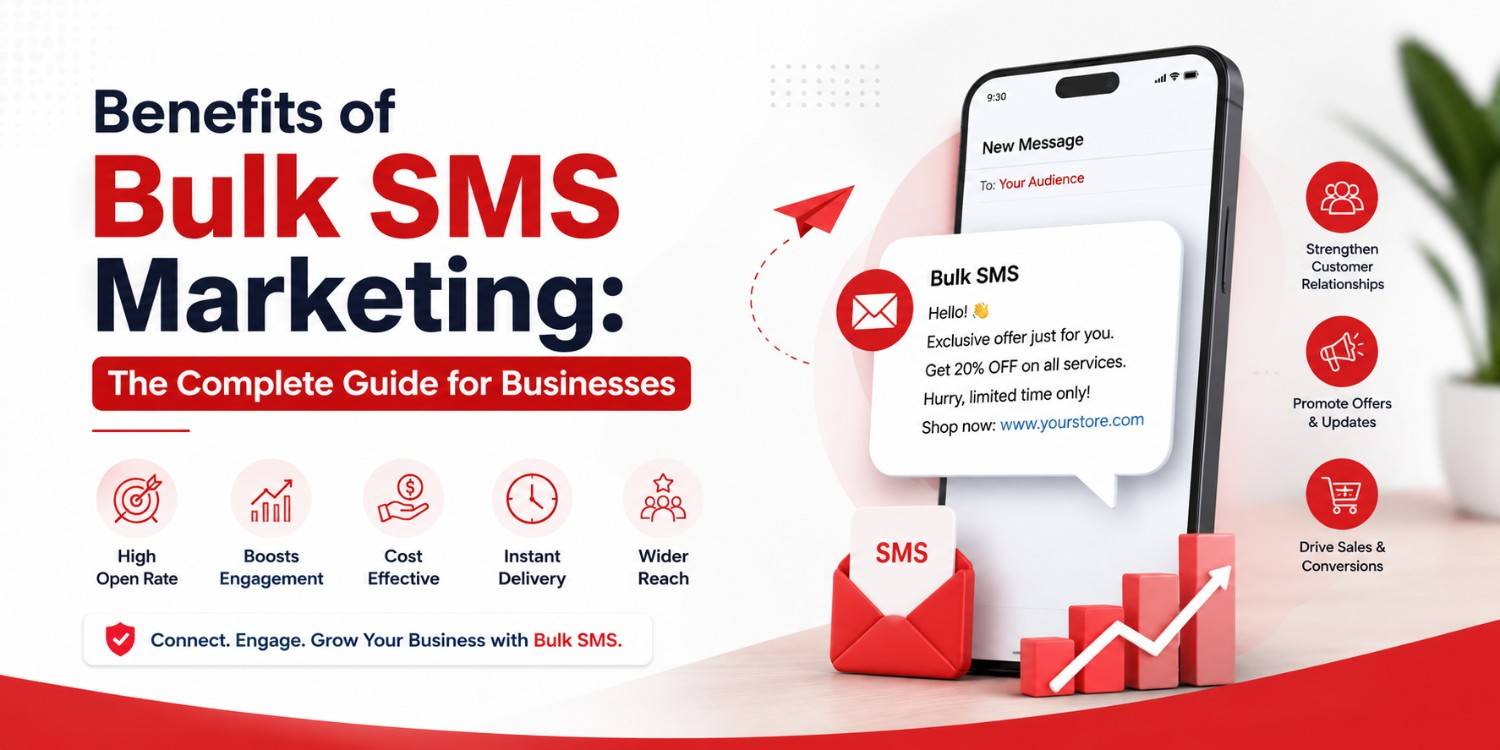
There are over 7 billion smartphone connections worldwide, and a text message still gets read faster than almost anything else you can send to a phone. While businesses chase attention across email inboxes, social feeds, and paid ads, bulk SMS marketing quietly delivers some of the highest open and response rates of any channel available today.
If you’re a business still on the fence about bulk SMS, this guide breaks down exactly why it works, where it works best, what compliance actually looks like in 2026 (especially if you’re sending from India), and how to launch your first campaign the right way.
What Is Bulk SMS Marketing?
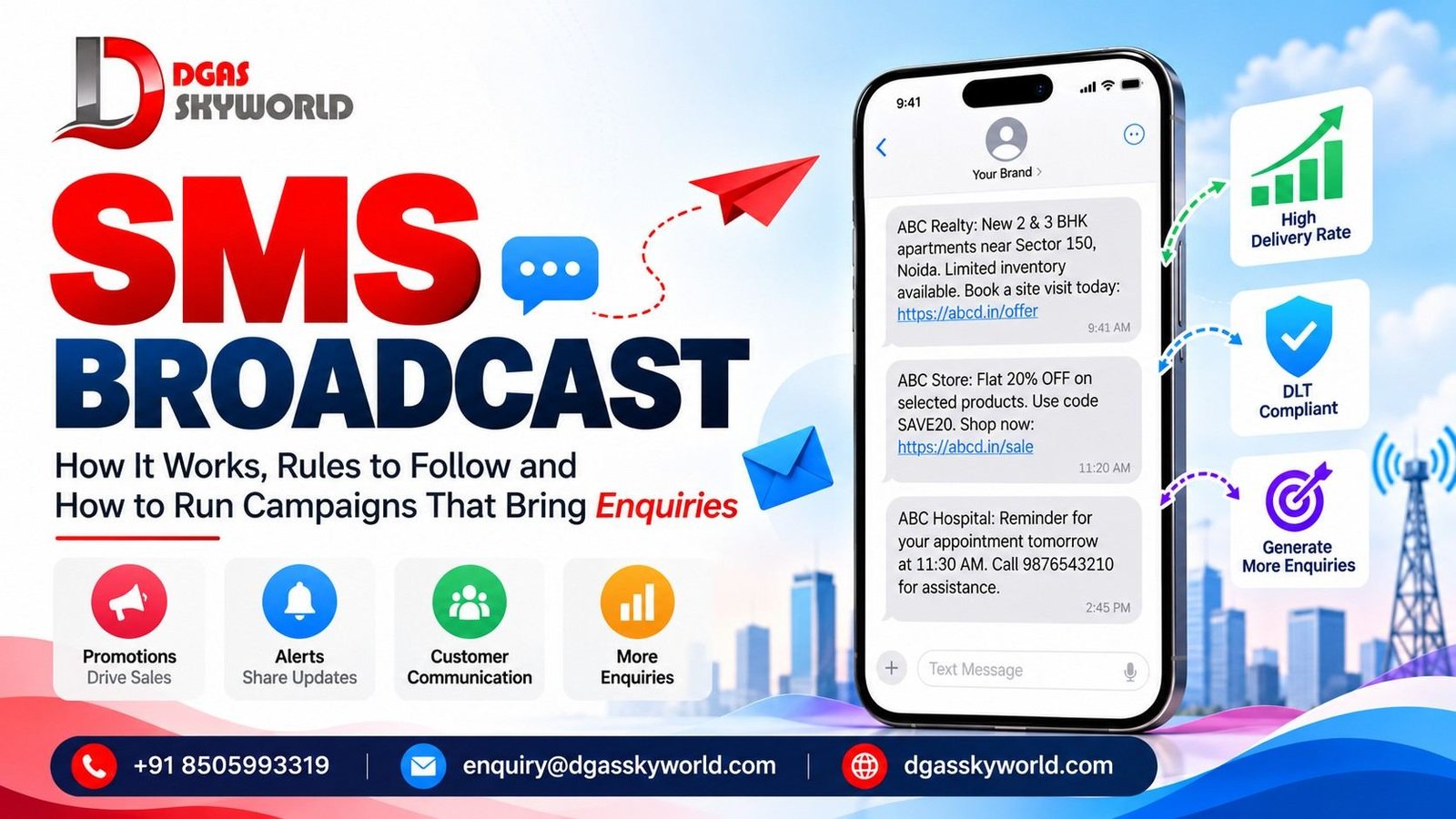
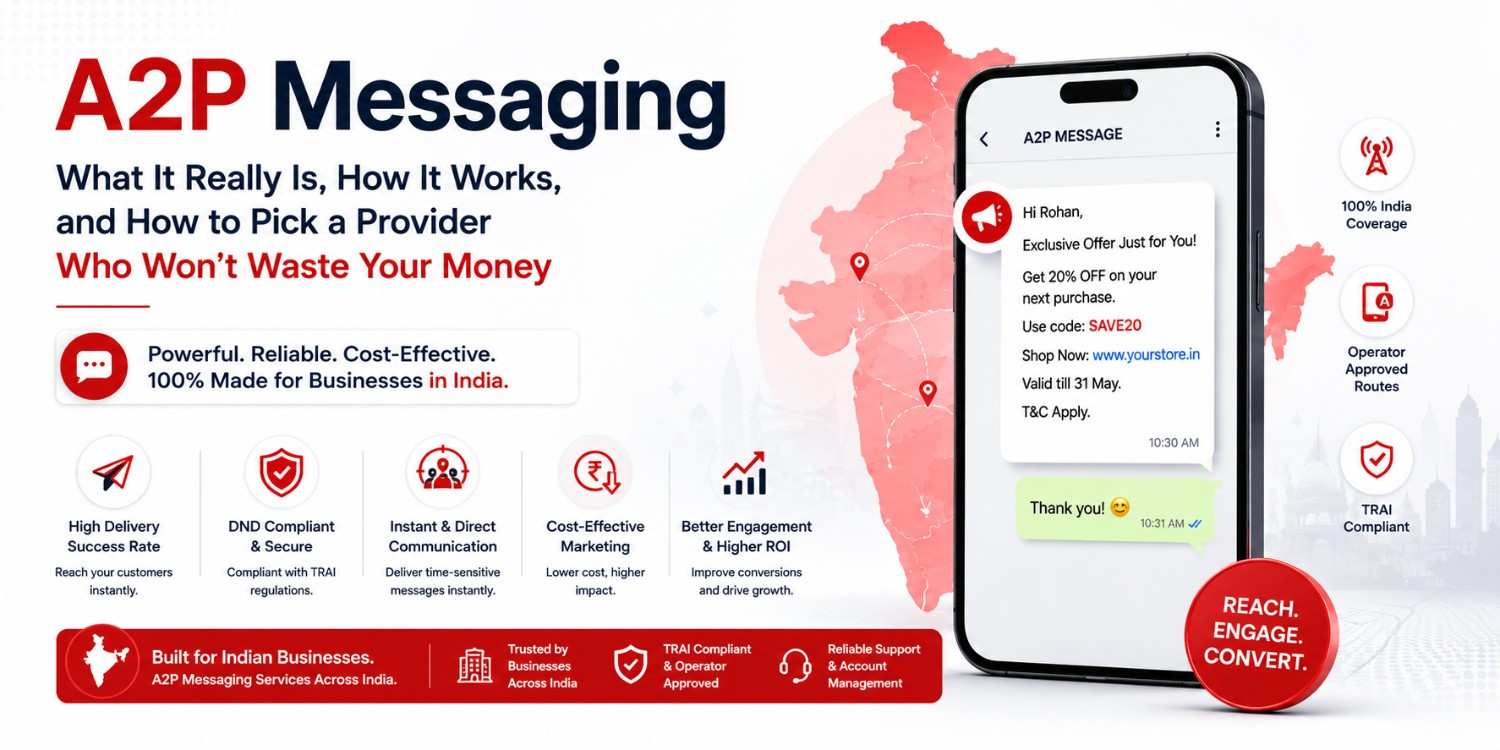
Bulk SMS marketing — also called mass text marketing or A2P (application-to-person) messaging — is the process of sending a single message to a large, segmented list of contacts simultaneously through an SMS gateway or messaging platform. Instead of manually texting customers one by one, businesses use a bulk SMS service to send hundreds, thousands, or millions of personalized messages in one action.
It’s worth understanding two quick distinctions before going further:
- Bulk SMS vs. group SMS: Bulk SMS sends messages privately — each recipient sees only their own message and can’t view or reply to the full list. Group SMS creates a shared thread where everyone can see each other’s replies. Marketing campaigns always use bulk SMS, never group SMS.
- Official API provider vs. reseller/aggregator: Not all bulk SMS providers are the same. Some are official WhatsApp API/SMS API partners with direct carrier relationships, while others are resellers routing your traffic through a middleman. This affects deliverability, pricing transparency, and how quickly compliance issues get resolved — something worth checking before you commit to a provider.
Top Benefits of Bulk SMS Marketing for Businesses
1. Industry-Leading Open Rates
SMS consistently records open rates north of 95%, with most messages read within the first three minutes of delivery. No other marketing channel — not email, not push notifications, not social media — comes close. When a message absolutely needs to be seen, bulk SMS marketing is the most dependable way to make that happen.
2. Instant, Real-Time Delivery
Bulk SMS doesn’t wait on Wi-Fi, app downloads, or algorithmic timing. Messages land directly on a customer’s phone within seconds, making it the natural choice for time-sensitive communication — OTPs, flash sales, appointment reminders, delivery alerts, and last-minute event updates.
3. Exceptional Cost-Effectiveness & ROI
Compared to paid social or display advertising, the cost per message in bulk SMS marketing is remarkably low, while the return can be significant — a single converted customer often covers the cost of an entire campaign send. In India, this cost advantage is even more pronounced once you factor in a DLT-registered Sender ID, which keeps per-message pricing predictable and transparent (more on DLT below).
4. Personalization & Segmentation at Scale
Modern bulk SMS platforms let you insert merge fields — name, city, last purchase, appointment date — so mass messages don’t read like mass messages. Combine this with audience segmentation by behavior, location, or purchase history, and a single “bulk” campaign can feel like a one-to-one conversation to every recipient.
5. High Conversion & Click-Through Rates
Because SMS is read almost immediately and demands minimal effort to act on, click-through and conversion rates on well-crafted campaigns routinely outperform email and social ads for time-bound offers, cart recovery, and re-engagement sequences.
6. Reliable Reach — No Spam Filters, No Algorithm
Email lands in spam folders. Social posts get buried by algorithms. SMS bypasses both. There’s no inbox promotions tab and no feed ranking to fight — your message either reaches the phone or it doesn’t, and delivery rates for permission-based lists are extremely high.
7. Low-Effort, Fast Campaign Turnaround
There’s no creative production cycle, no design team, and no ad approval queue. A well-written 160-character message with a clear call to action can be drafted, approved, and sent within the hour — ideal for last-minute promotions or urgent operational updates.
8. Measurable & Trackable Campaigns
Every bulk SMS platform provides delivery, read, and click reports, so you always know what’s working. Track conversion by segment, run A/B tests on message copy or send time, and refine every subsequent campaign based on real data rather than guesswork.
SMS + WhatsApp: Why 2026’s Best Campaigns Use Both The strongest customer engagement strategies in 2026 don’t rely on SMS alone. Businesses increasingly pair bulk SMS marketing for instant, universal-reach alerts with WhatsApp Business API for richer, two-way conversations — product images, order tracking, catalogs, and support chats. Used together, the two channels cover both the urgency of SMS and the depth of WhatsApp, giving customers the right experience depending on the message.
Bulk SMS Marketing Use Cases by Industry
E-commerce & Retail
- Abandoned cart recovery messages with a direct checkout link
- Flash sale and limited-time discount alerts
- Order confirmation and shipping/delivery updates
Real Estate
- Site visit reminders and confirmation texts for prospective buyers
- New project launch alerts for interested leads
- Price drop, inventory update, or limited-unit offer notifications
Healthcare
- Appointment booking confirmations and reminders
- Test report-ready notifications
- Prescription refill alerts
Banking & Financial Services (BFSI)
- OTP and identity verification messages
- Real-time fraud and transaction alerts
- EMI and bill payment reminders
Travel & Hospitality
- Booking and itinerary confirmations
- Flight delay or cancellation alerts
- Loyalty program updates and rewards
Bulk SMS Compliance: What Businesses in India Must Know
Bulk SMS marketing only works when it’s compliant — sending without proper registration or consent doesn’t just risk fines, it gets your messages blocked before they ever reach a phone.
DLT Registration Explained
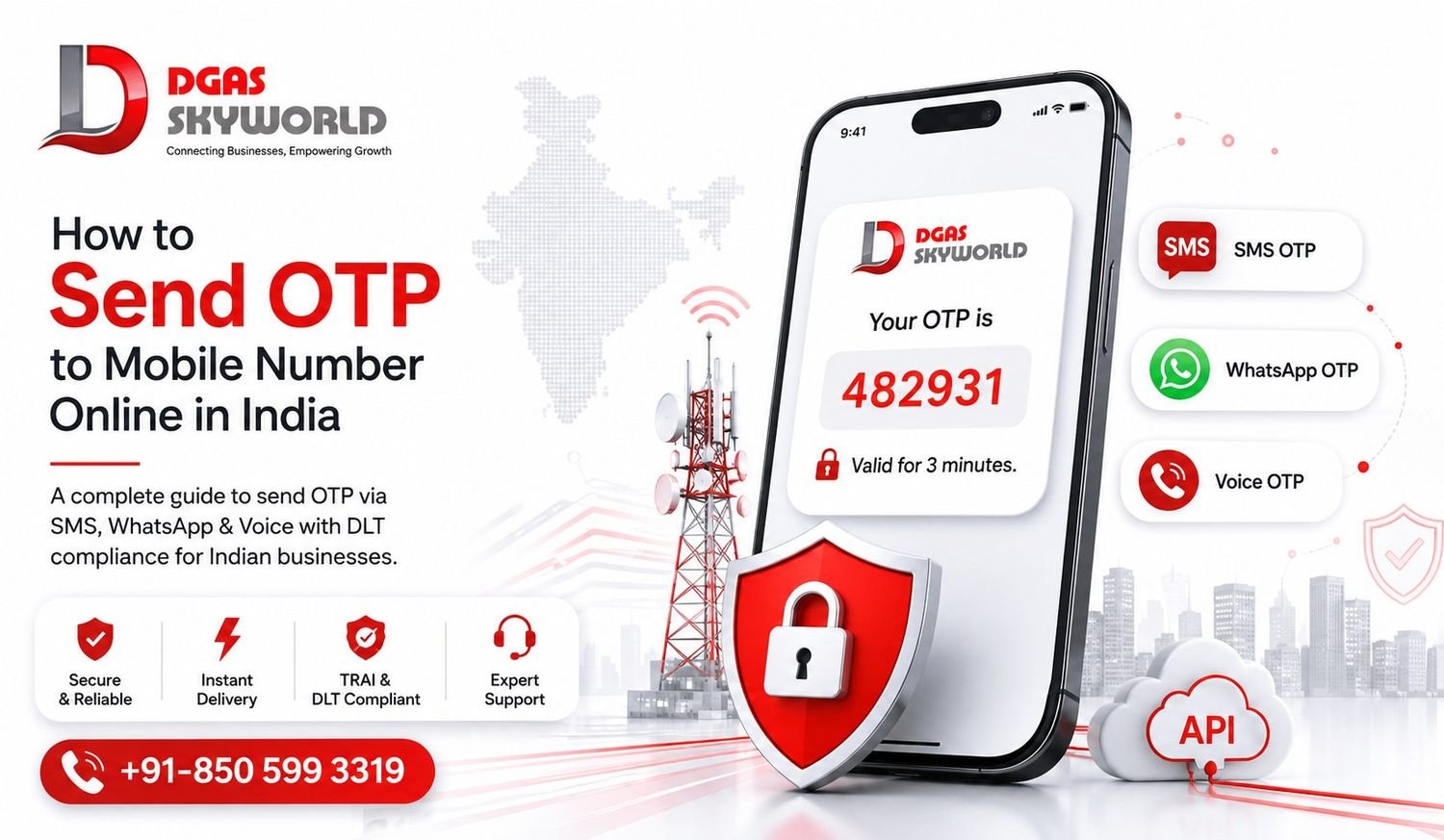
In India, every business sending promotional SMS or transactional SMS must register on the Distributed Ledger Technology (DLT) platform mandated by TRAI. This involves:
- Registering as an Entity with your business PAN and details
- Registering a Sender ID (Header) — the 6-character code customers see as the sender
- Registering and pre-approving your message templates before they can be sent
Any message sent without an approved DLT template gets filtered out by carriers, regardless of how good your bulk SMS provider is.
Consent & Opt-In Requirements
Beyond DLT, you need explicit consent from every recipient before sending promotional texts. Best practice includes:
- A clear opt-in mechanism (website form, app sign-up, or in-store collection)
- A double opt-in confirmation to avoid accidental sign-ups
- A visible opt-out instruction on every message (e.g., “Reply STOP to unsubscribe”)
- A secure, timestamped record of consent for every contact on your list
Global Compliance Note
If you’re sending to international audiences — the US, UK, UAE, Australia, Canada, or Singapore — remember that regulations vary by region. The US enforces the Telephone Consumer Protection Act (TCPA), the UK and EU fall under GDPR, and the UAE and Singapore have their own telecom marketing rules. A good bulk SMS provider will handle these regional nuances so you don’t have to track them individually.
How to Start a Bulk SMS Marketing Campaign (Step-by-Step)
- Choose the right bulk SMS provider — prioritize an official API provider with direct carrier connections and built-in DLT/compliance support over a reseller.
- Build and segment your contact list — only include contacts who’ve explicitly opted in, and group them by behavior, location, or purchase history.
- Get your Sender ID and templates approved — complete DLT registration (for India) or the equivalent regional registration before your first send.
- Craft your message — stay within the character limit, lead with value, include your business name, add a clear CTA, and always include an opt-out line.
- Schedule for the right time — respect local time zones and typical engagement windows; avoid odd hours or restricted days.
- Launch and monitor delivery — track delivered, read, and failed message rates in real time.
- Analyze and optimize — review click-through and conversion data by segment, then refine copy, timing, and targeting for your next campaign.
Bulk SMS vs. Email vs. WhatsApp: Which Channel Wins in 2026?
| Metric | Bulk SMS | WhatsApp Business API | |
|---|---|---|---|
| Open Rate | ~95%+ | ~20–30% | ~70%+ |
| Speed | Instant | Delayed | Instant |
| Rich Media | Limited (MMS) | Yes | Yes (images, docs, buttons) |
| Cost per Message | Low | Very low | Low–moderate |
| Best For | Urgent, time-sensitive alerts | Detailed, long-form content | Two-way, rich engagement |
No single channel wins outright — the smartest 2026 marketing strategies combine bulk SMS for speed and reach with WhatsApp for depth and email for detailed content, so every message reaches the right customer through the right channel.
FAQs
What is the difference between bulk SMS and group SMS?
Bulk SMS sends individual, private messages to many recipients at once — no one sees who else received it. Group SMS creates a shared conversation thread visible to all recipients. Marketing campaigns always use bulk SMS.
Is bulk SMS marketing legal in India?
Yes, provided the sender completes DLT registration with TRAI, uses pre-approved message templates, and obtains explicit consent from recipients before sending promotional messages.
What is DLT registration and why is it mandatory?
DLT (Distributed Ledger Technology) registration is a TRAI-mandated process requiring businesses to register their entity, Sender ID, and message templates before sending bulk SMS in India. It exists to curb spam and unauthorized commercial messaging.
How much does bulk SMS marketing cost in India?
Costs vary by provider and volume but are typically calculated per message, often just a few paise per SMS at scale, making it one of the most cost-effective marketing channels available.
What is a good open rate for bulk SMS?
Bulk SMS typically sees open rates above 95%, with most messages read within three minutes of delivery — significantly higher than email or social media.
Do I need an API to send bulk SMS, or can I use an app?
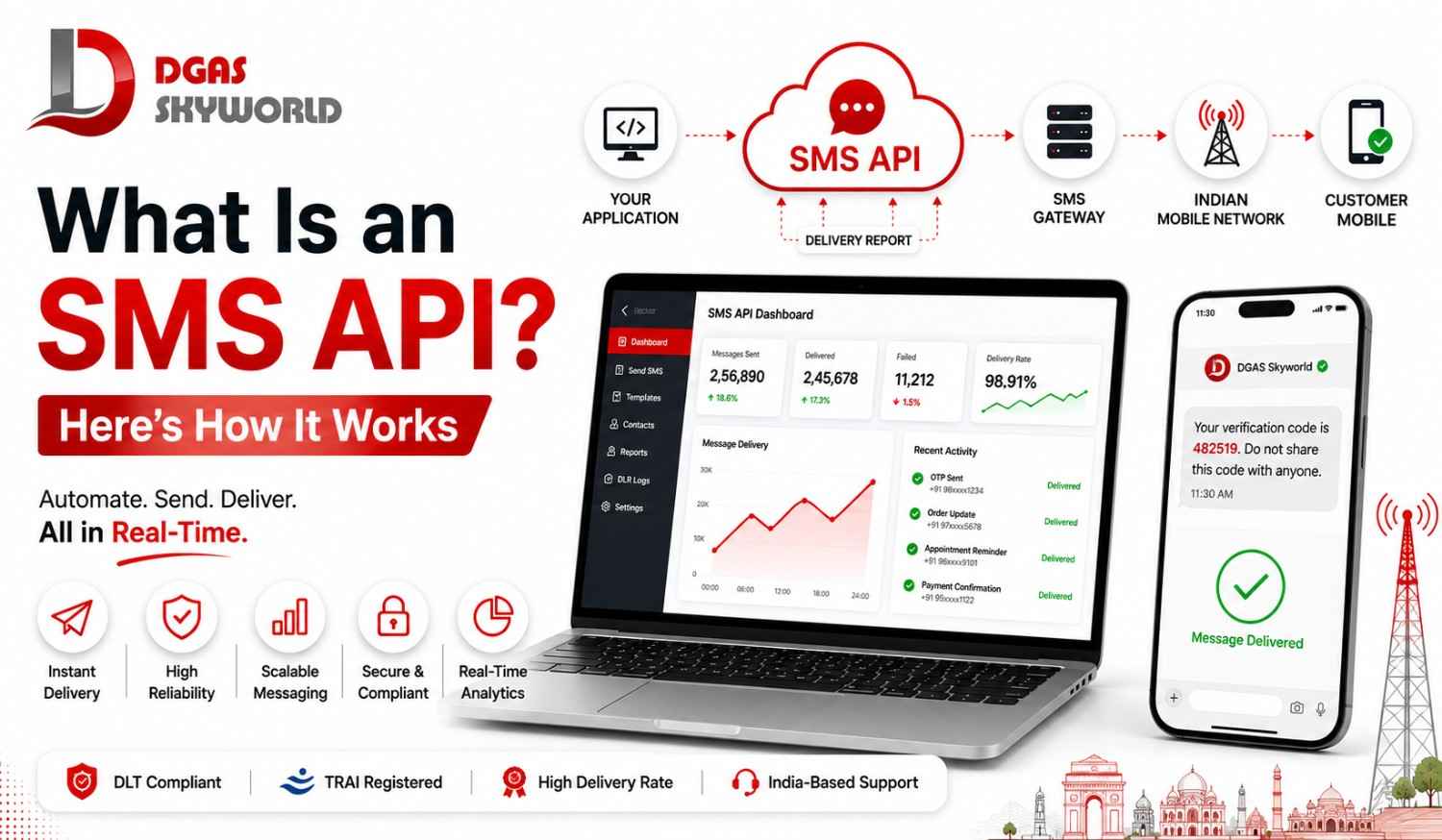
For serious business use, an SMS API or dedicated bulk SMS platform is recommended over consumer apps. APIs offer compliance handling, delivery tracking, segmentation, and integration with your CRM or e-commerce platform.
Conclusion
Bulk SMS marketing remains one of the fastest, most cost-effective, and most reliably read communication channels available to businesses in 2026 — from instant delivery and high open rates to precise targeting and measurable ROI. The businesses that get the most out of it are the ones that pair strong campaigns with proper DLT compliance and, increasingly, a combined SMS + WhatsApp strategy.
Looking for a DLT-compliant, official bulk SMS and WhatsApp API provider? Get in touch with DGAS Skyworld to build a compliant, high-performing messaging strategy for your business.