SMS Broadcast in India: How It Works, Rules to Follow and How to Run Campaigns That Bring Enquiries
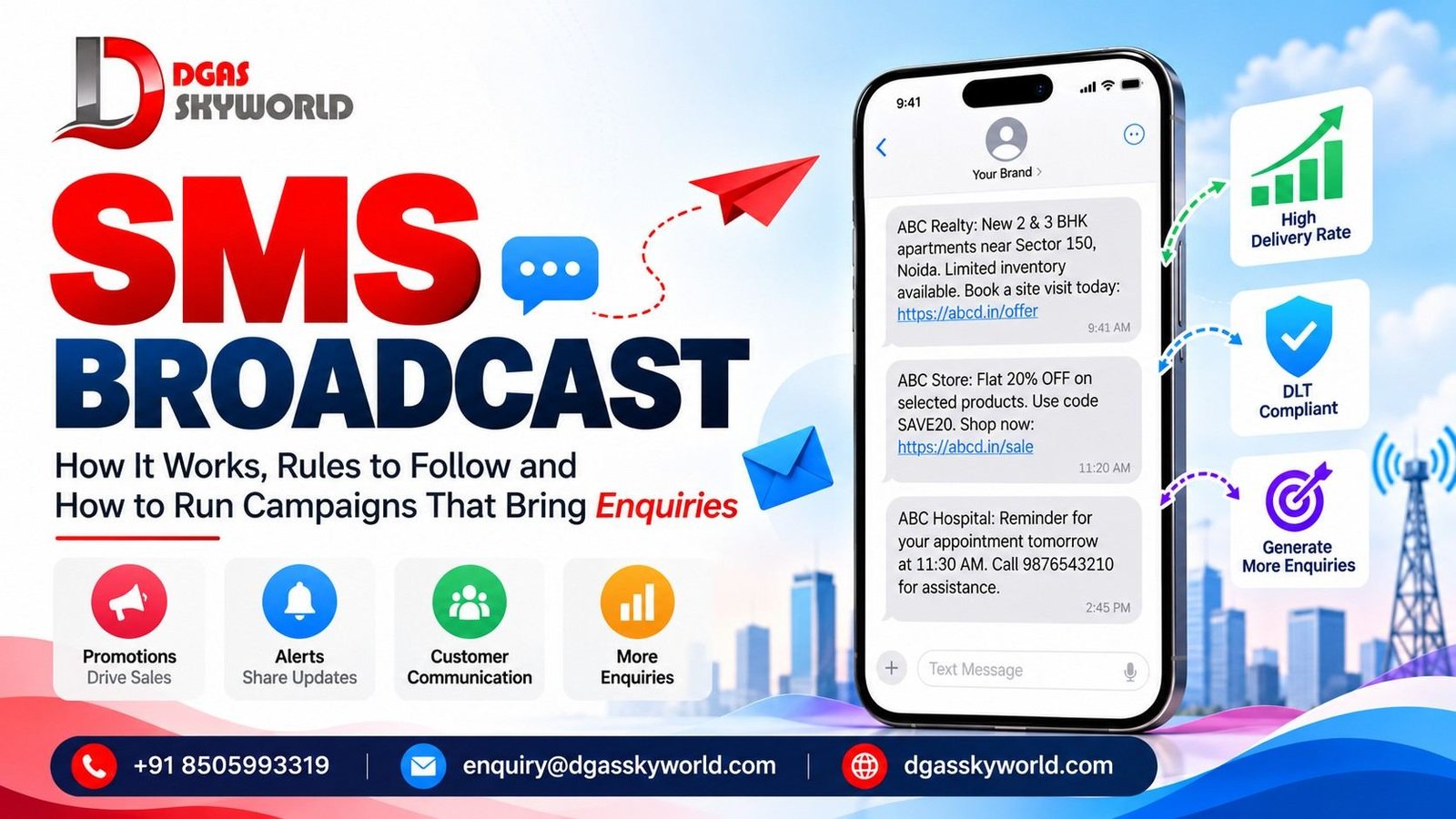
An SMS broadcast is one message sent to a large list of mobile numbers at the same time, where every recipient receives it as a private text. For Indian businesses, SMS broadcast is still the quickest way to reach a customer who may not have mobile data on, your app installed or your email open today. But an SMS broadcast that ignores DLT rules, sender ID approval or sending hours gets blocked, filtered or simply ignored. This guide explains how an SMS broadcast works in India, how to run one legally, and how to plan campaigns that bring replies, calls and enquiries instead of just delivery reports.
What Is an SMS Broadcast?
An SMS broadcast is a method of sending the same text message to many mobile numbers at once through an SMS platform or gateway. Each person gets the message as an individual SMS, cannot see other recipients, and any reply comes back only to the sender.
That is the short definition. The practical meaning is a little wider. When a real estate company texts 8,000 leads about a weekend site visit, when a university tells 20,000 students that exam dates have changed, or when a clinic reminds tomorrow’s patients about appointments, each of those is an SMS broadcast.
It helps to separate three terms that get mixed up:
- SMS broadcast describes the act of sending one campaign to a list or segment.
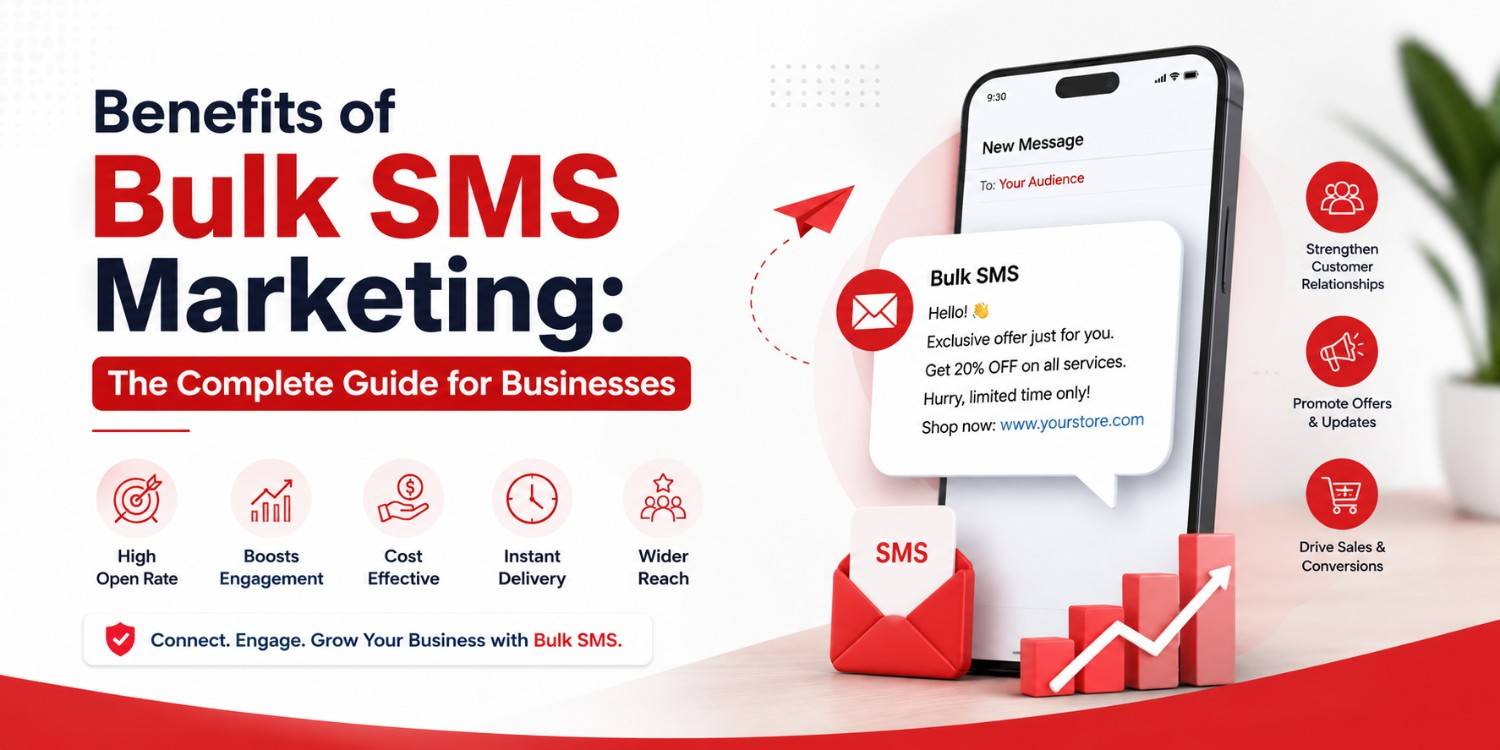
- Bulk SMS describes the service or capacity that makes high-volume sending possible. In India, the two terms are used almost interchangeably. You can read more about the service side on our bulk SMS service provider in India page.
- Group message is a shared chat thread where everyone sees everyone. An SMS broadcast is nothing like this. Nobody sees anybody else’s number.
One more point that matters in India: you cannot run an SMS broadcast from your personal SIM. Telecom rules limit how many messages a normal number can send, and regulated business messaging must go through a registered platform. That is where an SMS broadcast service like DGAS Skyworld comes in.
How Does an SMS Broadcast Work?
From your side, an SMS broadcast looks simple: upload numbers, write a message, press send. Behind that button, a few things happen in a few seconds.
- Your list is checked. The platform removes duplicates and invalid numbers, and scrubs the list against DND and preference registers so you do not message people who have blocked promotions.
- Your template is matched. Every message must match a content template already approved on the DLT platform. If the text does not match the registered template, the operator rejects it.
- The platform splits the broadcast. One campaign becomes thousands of individual messages, each submitted to the SMS gateway.
- Routing happens. The gateway chooses an operator route for each number (Airtel, Jio, Vi, BSNL and others). Good platforms retry on another route if one fails.
- Delivery reports come back. Each message returns a status: delivered, failed, expired or pending. This is called a delivery report (DLR), and it is the evidence you need to judge a campaign.
DGAS Skyworld’s gateway is directly connected to major operators and delivers most messages within 2 to 6 seconds, with an intelligent retry algorithm for failed routes. The reason this matters for an SMS broadcast is timing. If you are sending a “sale ends tonight” message to 50,000 people, a 20-minute delay between the first and last recipient defeats the purpose.
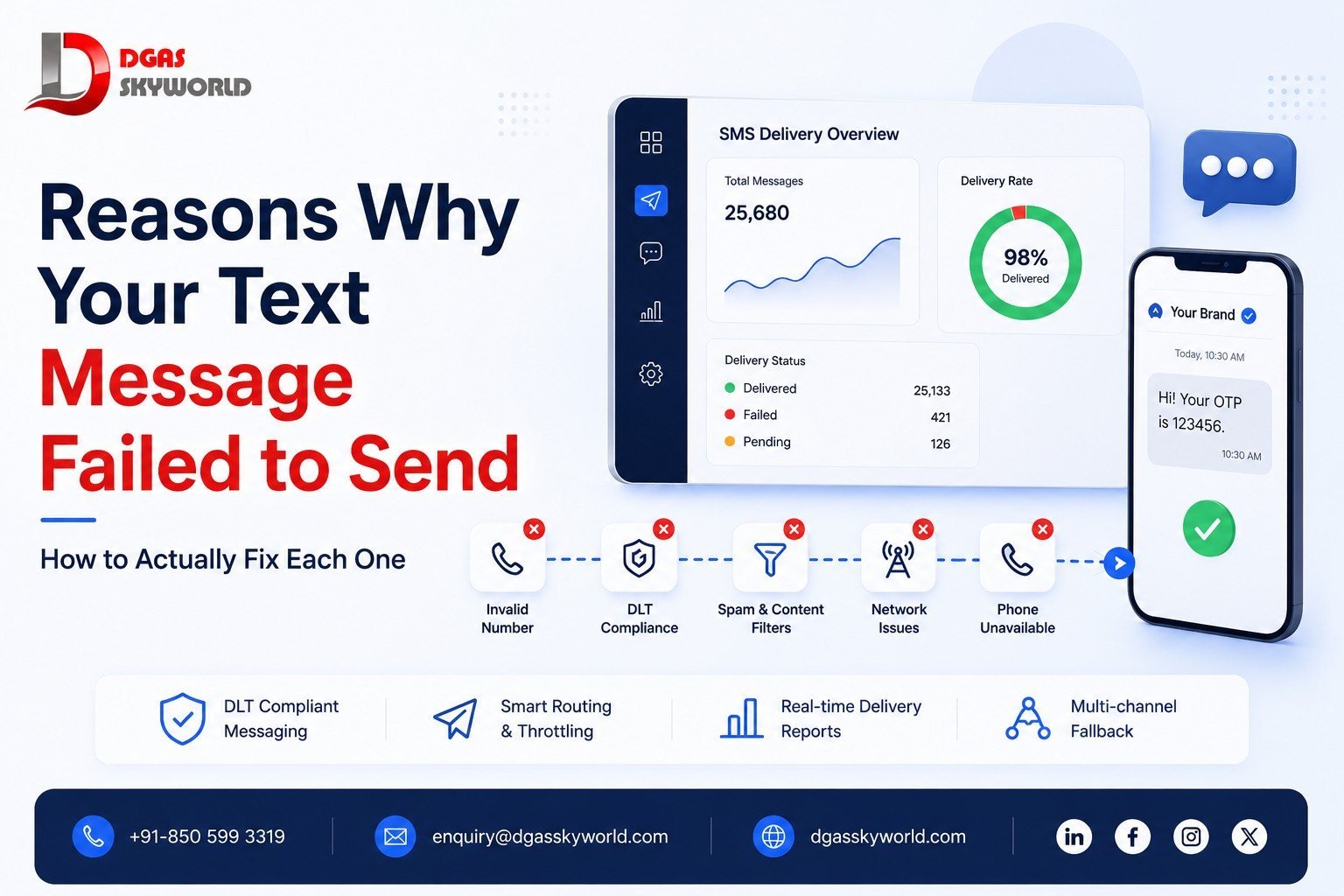
If your messages are failing and you cannot work out why, our guide on why a text message fails to send and how to fix each cause covers the common reasons, from DLT mismatches to blocked sender IDs.
Types of SMS Broadcast Used by Indian Businesses
Not every SMS broadcast is the same, and the type decides which rules, timings and routes apply.
Promotional SMS broadcast
This is for marketing: offers, launches, festival sales, event invitations. Promotional messages go only to numbers that have not opted out under DND preferences, and they are restricted to specific sending hours (9 AM to 9 PM under TRAI norms). A promotional SMS broadcast is the tool most businesses use to generate enquiries. See our promotional SMS page for sender ID and template details.
Transactional SMS broadcast
This is for information the customer is expecting: order confirmations, payment alerts, shipment updates, appointment reminders, service interruption notices. Transactional messages can reach numbers even if they are on DND, because the customer has a relationship with you and needs the information. They can be delivered round the clock. Details are on the transactional SMS page.
OTP and alert broadcasts
OTPs are triggered one at a time by a user action, so they are not a classic broadcast. But alerts such as “our servers are under maintenance from 11 PM to 1 AM” are sent to everyone affected at once. If you want to understand the OTP side separately, read our comparison of the best OTP SMS service providers in India.
A common mistake is sending promotional content through a transactional route. Operators scan content, and mixing the two gets sender IDs suspended. Keep the categories clean.
SMS Broadcast vs WhatsApp, Email, RCS and Voice Broadcast
SMS is not the only way to broadcast. Here is how the main channels compare for Indian business use.
| Channel | Needs internet? | Needs opt-in/template approval? | Best for |
|---|---|---|---|
| SMS broadcast | No | DLT registration and template approval | Offers, alerts, reminders, reach on every phone |
| WhatsApp broadcast | Yes | Meta-approved templates and user opt-in | Rich media, two-way conversations |
| Email broadcast | Yes | Consent and sender authentication | Long content, newsletters |
| RCS | Yes | Verified sender and supported devices | Branded cards, buttons, images |
| Voice broadcast | No | Voice template and routing | Urgent alerts, regional-language audio |
The point most comparison articles miss is that these channels work best together. SMS has the widest reach because it works on a basic keypad phone with no data. WhatsApp and RCS give you richer content. A sensible plan is an SMS broadcast for reach and urgency, followed by a WhatsApp message for those who engage. DGAS Skyworld runs all of these from one platform, including WhatsApp Business API, RCS messaging, Truecaller business messaging and voice solutions.
Planning an SMS broadcast for your business? Book a free demo with DGAS Skyworld and get 100 free SMS credits to test delivery on your own list. Book a Free Demo or call +91-850 599 3319.
Why Businesses Still Choose SMS Broadcast
You will hear that SMS is old. It is also the only channel that works on every phone in the country, and these are the reasons it keeps getting used.
It reaches people who are offline. A large share of customers, especially outside metro cities, do not keep data on all day. An SMS arrives regardless.
It gets read quickly. DGAS Skyworld’s own campaign data and industry experience point to most SMS being read within minutes of arriving, which is why time-bound offers and alerts work well on this channel.
It costs little per contact. Pricing is per delivered message, and a well-targeted SMS broadcast to a warm list usually costs far less per enquiry than paid ads aimed at cold audiences.
It is easy to track. With short links, you can see clicks by mobile number, browser and location. With delivery reports, you can see exactly which messages failed and why.
It needs nothing from the customer. No app, no sign-up, no download. That is a big advantage for government bodies, schools and local businesses.
SMS Broadcast Use Cases That Actually Work in India
Generic lists of “promotions, reminders and alerts” are not much help. Here is how SMS broadcast is used in specific sectors, with message structures that work.
Real estate
Builders and brokers use an SMS broadcast to push site-visit invitations, launch announcements and payment milestone reminders. Segmentation matters here. A person who enquired about 2 BHK flats in Noida should not get a message about plots in another city.
Example: “Hi Rahul, weekend site visit for 2 BHK at [Project], Sector 150 Noida. Reply YES to book a slot or call 9XXXXXXXXX. Offer ends Sunday.”
Education
Colleges and coaching institutes send admission deadlines, fee reminders, exam schedules and result notifications. Agra Nagar Nigam, Punjabi University Patiala and the Indian Institute of Foreign Trade are among the institutions that use DGAS Skyworld for large-scale messaging.
Healthcare
Clinics and diagnostic labs use an SMS broadcast for appointment reminders, report-ready alerts and vaccination camps. Reminders reduce no-shows, and the cost of one SMS is far lower than the cost of an empty slot.
Banking, finance and insurance
Premium due dates, EMI reminders, KYC update requests and fraud alerts all go out by SMS broadcast. These must be sent through transactional or service routes and with exact DLT-approved wording.
E-commerce and retail
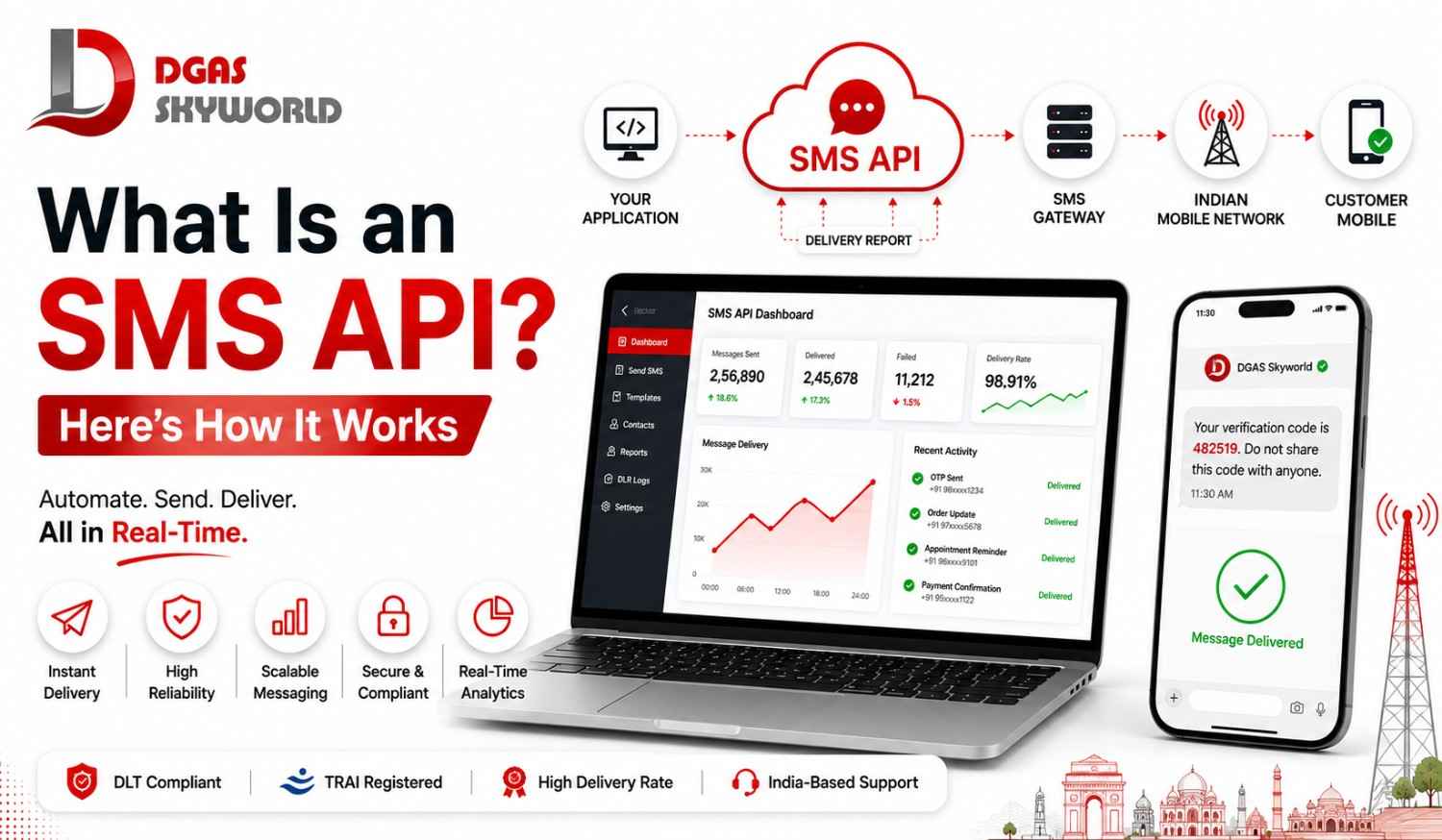
Flash sales, cart reminders, order updates and delivery notifications. Retailers often run two kinds of SMS broadcast side by side: promotional campaigns to the full list and transactional updates triggered per order through an API. Our guide on what an SMS API is and how it works explains how the second kind gets automated.
Government and public sector
Citizen alerts, scheme announcements, tax and bill due dates, emergency notices. DGAS Skyworld has delivered 10+ government and PSU projects, including work for municipal bodies, where the volume is high and the audience is mixed in language and device type. That is why support for Hindi, Tamil, Telugu, Marathi and other regional languages through Unicode matters.
Logistics and travel
Shipment tracking, delivery slot changes, flight and booking updates. These are time-critical, so delivery speed counts more than creative copy.
DLT Registration: The Step You Cannot Skip
Every SMS broadcast in India must follow TRAI’s DLT (Distributed Ledger Technology) framework. If you are new to this, there are three things to register:
- Entity registration. Your business is registered as a sender on a telecom operator’s DLT portal, with documents such as PAN and GST or company registration.
- Header (sender ID) registration. A six-character name such as DGASWS that appears as the sender instead of a number. Promotional and transactional headers are registered separately.
- Template registration. Each message format is registered in advance, with variable fields marked. Only messages matching an approved template will be delivered.
Most delays in launching an SMS broadcast come from DLT, not from technology. Rejected templates are the usual cause: a template with vague wording, a missing company name, or a link that is not whitelisted. DGAS Skyworld’s team handles entity, header and template approvals for clients, and you can read the full process on our DLT registration page.
Two practical tips from campaigns we see every week. First, register templates with variables (like name or order number) from the beginning, so you are not forced to resubmit later. Second, keep promotional and transactional templates strictly separate. Mixing them is the quickest way to get a header blocked.
How to Send an SMS Broadcast: Step by Step
To send an SMS broadcast in India: complete DLT registration, upload your contact list, write a template-matched message, choose a sender ID, schedule or send, and track delivery reports.
Here is that process in more detail, using the DGAS Skyworld workflow.
Step 1: Create your account. Book a demo and get 100 free credits to test the platform before committing.
Step 2: Complete DLT registration. Entity, header and template approvals. Our team supports this so you are not stuck waiting.
Step 3: Upload your contacts. Upload a CSV or Excel file, or sync contacts through the API. Clean the file first: remove duplicates, numbers without a valid 10-digit format, and people who have asked you to stop.
Step 4: Write the message. Use your approved template. Add personalisation fields such as name or order ID, and a short link if you need clicks tracked. Compose in English or a regional language.
Step 5: Send or schedule. Send immediately for urgent alerts. For promotions, schedule inside permitted hours and at a time when your audience is likely to look at their phones.
Step 6: Read the reports. Check delivered, failed and pending counts. Look at operator-wise performance. Export failed numbers, find the reason, and fix the list before the next broadcast.
Want help setting up your first SMS broadcast? Our team will guide you through DLT, sender ID and template approval. Talk to an Expert or Book a Demo.
Best Practices for SMS Broadcast Campaigns
These are the habits that separate campaigns that generate enquiries from those that just burn credits.
Segment before you send
Sending the same text to your entire database is the most common error. Split by city, product interest, last purchase date or enquiry stage. A clinic’s message to people overdue for a check-up should be different from the one to people who just visited.
Lead with the point
Most phones show the first 30 to 40 characters in the preview. Put the offer or the action there, not your brand’s greeting. “Flat 20% off till Sunday” beats “Dear customer, greetings from.”
Keep within segment limits
A single SMS holds 160 characters in standard English. If you use Hindi or other regional scripts (Unicode), that falls to 70 characters per segment. Longer messages are billed as multiple segments. Write the template, then test it with the longest variable values, such as a long customer name, so the final message does not jump to two or three segments.
Use one call to action
“Call now,” “Reply YES” or “Visit this link” works. Offering three different things confuses people. If you want enquiries, a missed-call number or a reply keyword gives low-effort ways to respond.
Respect timing
Promotional messages are allowed only between 9 AM and 9 PM. Within that window, avoid early mornings and late evenings unless the message is truly time-sensitive. For working professionals, lunch breaks and early evenings often get the best response. For homemakers or retired customers, mid-morning may be better. Test, do not assume.
Personalise with real data only
Using a name is fine. Using wrong data (a wrong city, a wrong product) is worse than not personalising at all. Check your variables before every send.
Use short, trackable links
Raw URLs eat characters and look suspicious. DGAS Skyworld’s link shortener creates short branded links and tracks clicks by number, browser, IP and location, so you can see which segment actually responded.
Keep your list clean
Remove numbers that have failed repeatedly. Remove people who ask to stop. A smaller, cleaner list performs better than a large, stale one.
Common SMS Broadcast Mistakes
- Sending promotions over a transactional route. It may get delivered for a while, then the header is blocked.
- Using an unapproved link or a mismatched template. The message is rejected and you are charged confusion, not credits.
- Ignoring failed reports. Failures usually point to a fixable list or template problem.
- Sending too often. Daily promotions to the same list drive people to block you. A weekly or fortnightly rhythm is more sustainable for most businesses.
- No follow-up. An SMS broadcast generates interest. If nobody calls back or replies to the enquiry, the campaign is wasted. Assign someone to handle responses on the day you send.
- Judging success by delivery rate alone. Delivered is not the same as acted upon.
How to Measure an SMS Broadcast
Delivery rate tells you whether the message arrived. It does not tell you whether the campaign worked. Track these in order:
- Delivery rate. Share of submitted messages that were delivered. A low number points to list quality, route issues or template problems.
- Click-through rate. Share of delivered messages whose link was clicked, tracked by short link.
- Replies and missed calls. Direct responses to your call to action.
- Enquiries and conversions. Leads logged in your CRM, calls received, bookings made. Tag each broadcast with a unique link or number so you can attribute results.
- Opt-outs. A spike after one broadcast tells you the content or frequency was wrong.
Run small A/B tests before large sends. Send two versions of a message to 5% of your list each, and send the winner to the rest. It costs very little and prevents expensive mistakes.
SMS Broadcast Pricing: What Decides the Cost
Rather than quoting a rate that will be out of date next month, here is what actually decides what you pay for an SMS broadcast in India:
- Volume. Higher volume usually means a lower per-SMS rate. This is why DGAS Skyworld offers volume-based plans, with discounts for larger commitments.
- SMS type. Promotional, transactional and OTP routes are priced differently.
- Segment count. A 200-character message uses two segments. Unicode messages reach the limit faster.
- Pay on submitted vs delivered. Some providers charge for every message submitted, whether it reaches the phone or not. DGAS Skyworld’s model is to charge only for successfully delivered SMS.
- Hidden costs. Ask whether DLT scrubbing, setup and validity are included. In our plans, DLT scrubbing is included, there is no setup fee and credits have lifetime validity.
For an exact quote based on your monthly volume, visit our pricing page or contact the team.
How to Choose an SMS Broadcast Service Provider in India
Many providers promise “100% delivery”. No honest provider can, because delivery depends on the operator network and the handset. Ask these questions instead.
Is the provider DLT-compliant, and do they help you register? A provider that leaves you alone with the DLT portal will cost you weeks.
What is the delivery speed, and is there a retry mechanism? Ask for a test on your own numbers.
Do you pay for delivered or submitted messages? This single point changes your real cost.
Is there a proper API? If you plan to automate alerts from your CRM, website or app, check for HTTP/HTTPS, SMPP, JSON and ready SDKs for PHP, Java, Node.js and Python.
Do they offer real-time delivery reports with operator-wise breakdown? You need this to diagnose problems.
Who picks up the phone when something breaks at 11 PM? Look for 24×7 support and a named account manager for larger accounts.
Can they grow with you? Today you need SMS. Next year you may need WhatsApp, RCS or voice. Moving platforms later is painful.
Why DGAS Skyworld for Your SMS Broadcast
DGAS Skyworld has served 12,000+ active users since 2017, from startups to municipal bodies. Here is what that looks like in practice.
- Direct operator connectivity with Airtel, Jio, Vi and BSNL, hosted on AWS with three Indian data centres.
- 2 to 6 second delivery with an intelligent retry algorithm and 99.9% uptime SLA.
- Pay only for delivered SMS, with DLT scrubbing charges included and zero setup fee.
- Managed DLT support for entity, header and template approval.
- Developer-friendly API with webhooks for delivery reports, a Postman collection and a sandbox, so integration takes under 30 minutes for most teams.
- Multi-language and Unicode support for Hindi and 12+ regional languages.
- DND and DLT blacklist filtering to keep campaigns compliant.
- Dedicated account manager and 24×7 support on phone, email and WhatsApp.
- City-level support for businesses in Delhi, Mumbai, Bangalore, Hyderabad, Chennai, Pune, Noida, Gurgaon, Jaipur and Lucknow.
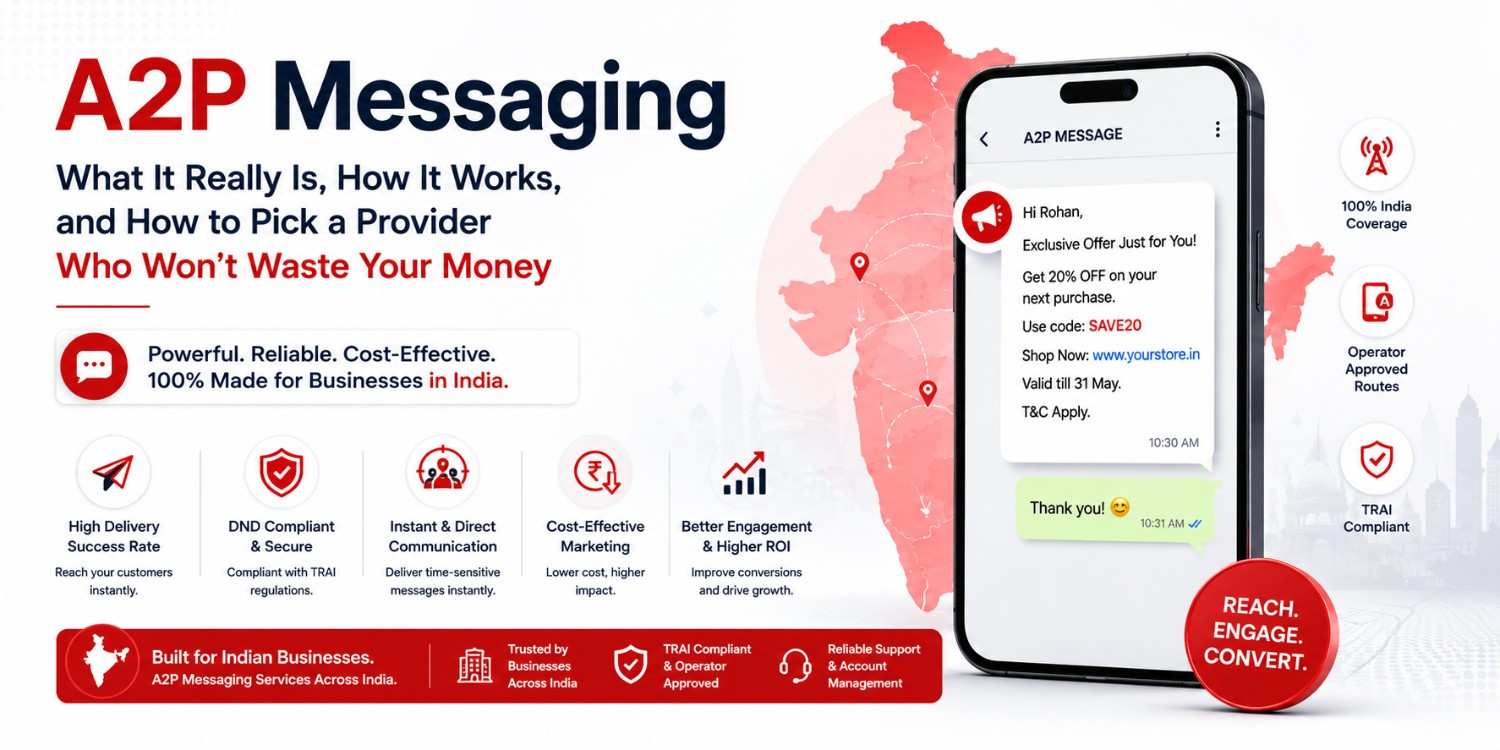
Because DGAS Skyworld is a full CPaaS platform, the same account also supports AI chatbot automation, email API and integrations with CRMs and ecommerce tools like Zoho, Shopify and WooCommerce. If you want to understand how application-to-person traffic works across channels, our explainer on A2P messaging is a good next read.
Automating Your SMS Broadcast With an API
A manual SMS broadcast from a dashboard suits campaigns: festival offers, announcements, one-off reminders. But recurring messages should not depend on someone remembering to upload a file.
With an SMS API, your website, CRM or app triggers messages automatically: an order is shipped, a payment is received, a policy is about to expire, an appointment is tomorrow. You can mix both approaches. Run promotional campaigns from the dashboard, and let the API handle event-driven alerts.
For a sense of how simple the integration is, a basic send request needs only an authentication key, your approved template ID, sender ID, the mobile number and the message variables. The delivery status comes back through a webhook, so your own system can record whether each message was delivered.
Turning an SMS Broadcast Into Enquiries
Since your goal is enquiries, not just delivery, build the campaign backwards from the response.
Decide the one action. Call, reply, visit a page or book a slot. Everything in the message supports that action.
Make responding effortless. A tap-to-call number or a short link to a mobile-friendly form works better than asking people to type a long URL.
Match the segment to the offer. An offer for existing customers is not the same as an offer for cold leads.
Be ready to answer. If you send 10,000 messages and 300 people respond within an hour, who answers? Brief your sales or support team before you hit send.
Follow up on a second channel. People who clicked but did not enquire can be targeted again on WhatsApp or by voice call. That layered approach is what an omnichannel platform makes possible.
Review and repeat. Keep a record of what you sent, to whom, when, and what came back. After three or four broadcasts you will know your best timing, your best offer type and your strongest segment.
Final Thoughts
An SMS broadcast looks like the simplest tool in a marketer’s kit, and that is exactly why so many get it wrong. The difference between a broadcast that generates enquiries and one that wastes credits comes down to unglamorous details: clean lists, approved templates, correct sender IDs, sensible timing, clear calls to action and someone ready to respond.
If you are planning an SMS broadcast for your business in India, DGAS Skyworld can take care of the technical and compliance side, from DLT registration to delivery reporting, so your team can focus on the message and the response.
Explore our SMS solutions, or book a free demo and test your first SMS broadcast with 100 free credits. You can also call the sales team directly on +91-850 599 3319.