Virtual Number for WhatsApp Business in India: The Complete 2026 Guide
Too Long? Read This First
- A virtual number for WhatsApp is a cloud-based phone number, not tied to a physical SIM, that businesses use to run WhatsApp Business separately from personal numbers.
- India has over 500 million monthly active WhatsApp users — the largest WhatsApp market in the world — which is exactly why a dedicated virtual number for WhatsApp business has become non-negotiable for serious Indian brands.
- A virtual number becomes truly powerful only when it’s connected to the official WhatsApp Business API, unlocking multi-agent access, automation, chatbots, and analytics — something the free WhatsApp Business app can’t offer at scale.
- Free or unverified virtual numbers frequently fail WhatsApp verification or get banned later. A virtual number for WhatsApp business India should always come from an official Meta-authorised provider.
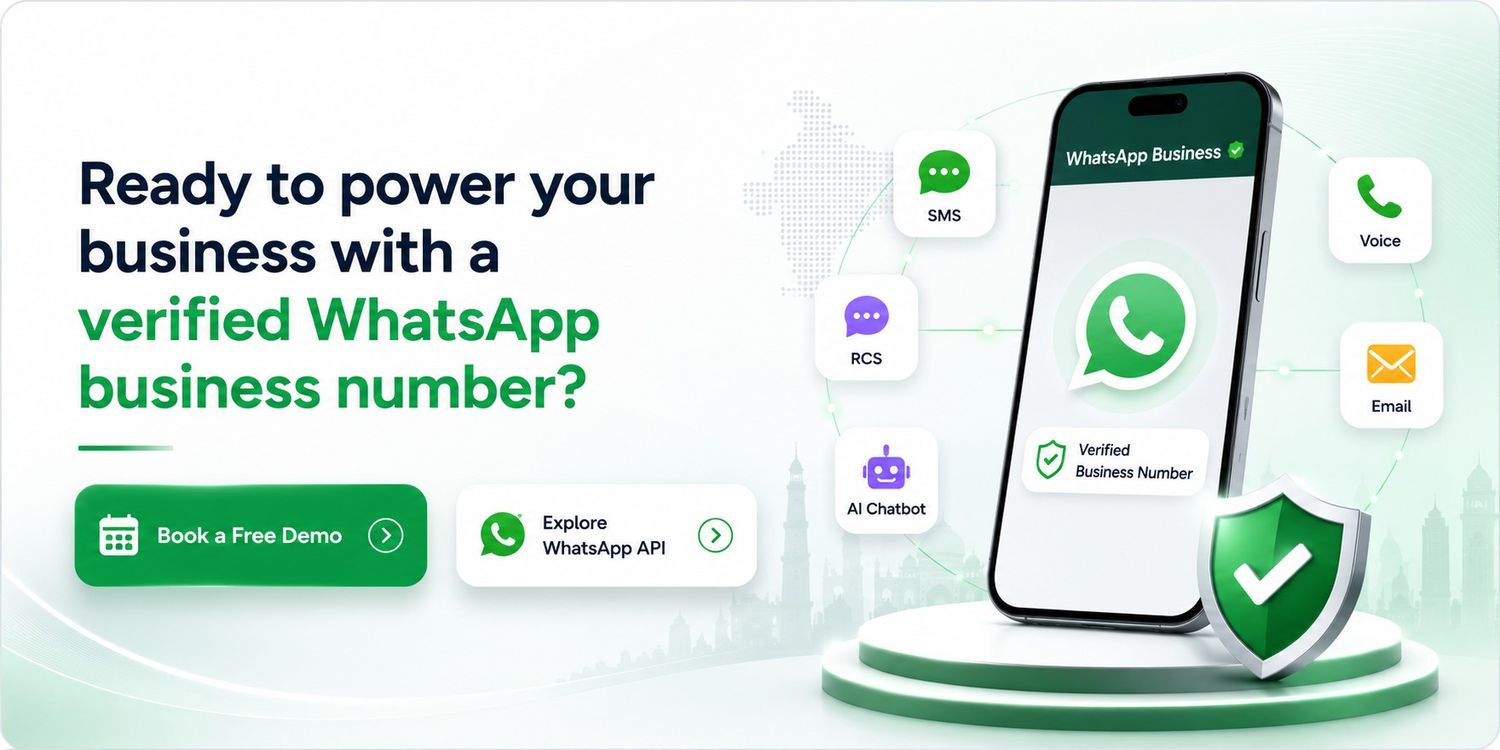
- The real leap in ROI happens when a virtual number sits inside a full omnichannel CPaaS stack — WhatsApp, SMS, RCS, voice, and email working together on one dashboard — rather than as a standalone tool.
- DGAS Skyworld, India’s own omnichannel CPaaS platform (operating since 2017), issues verified virtual numbers for WhatsApp Business API and has powered communication for government bodies, PSUs, and enterprises across India — book a free demo to see it in action.
What Is a Virtual Number for WhatsApp Business?
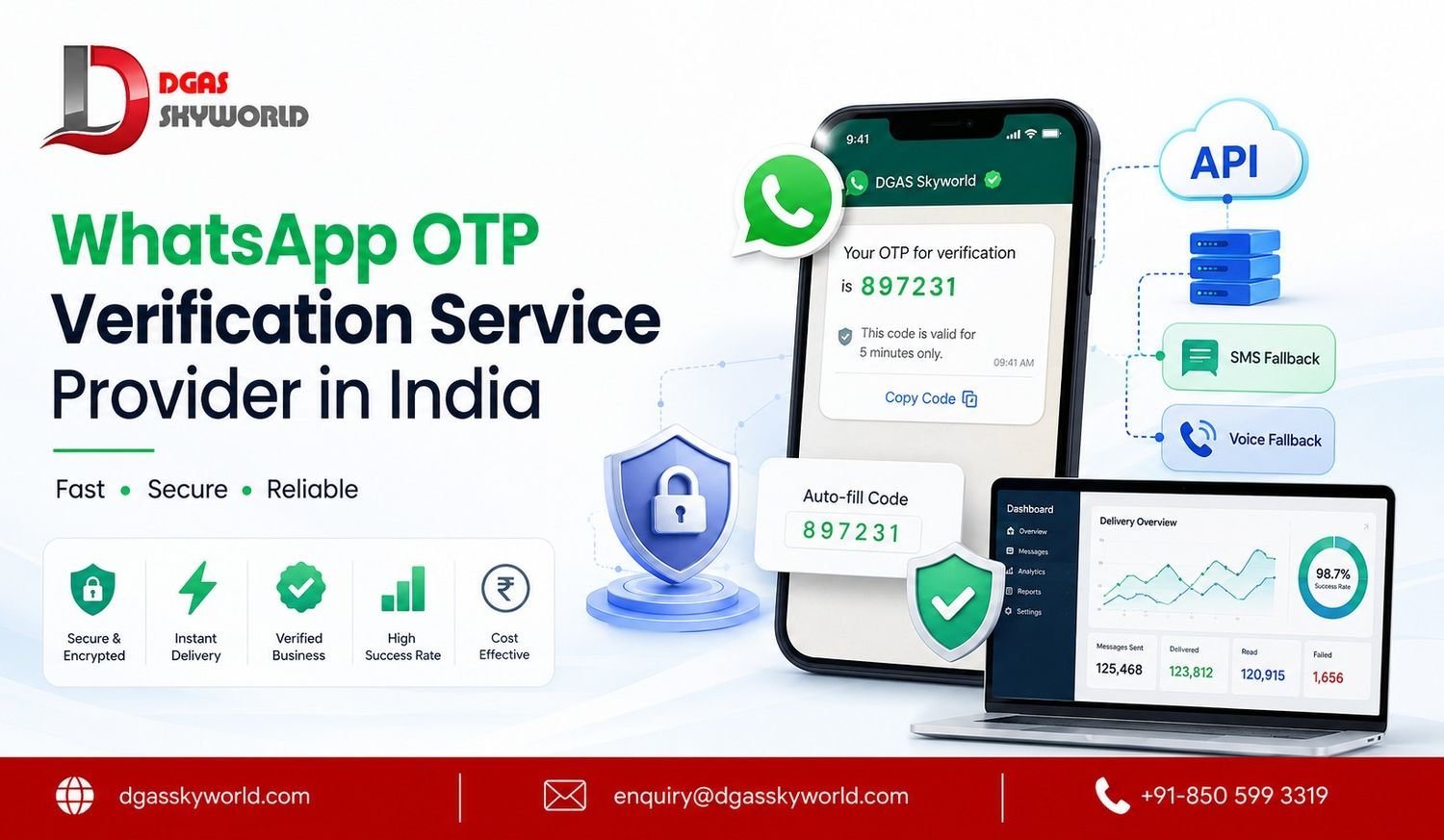
A virtual number for WhatsApp is a cloud-hosted phone number that works over the internet instead of a physical SIM card. It can still receive the SMS or voice OTP that WhatsApp needs for verification, but it isn’t tied to any single device, employee, or location.
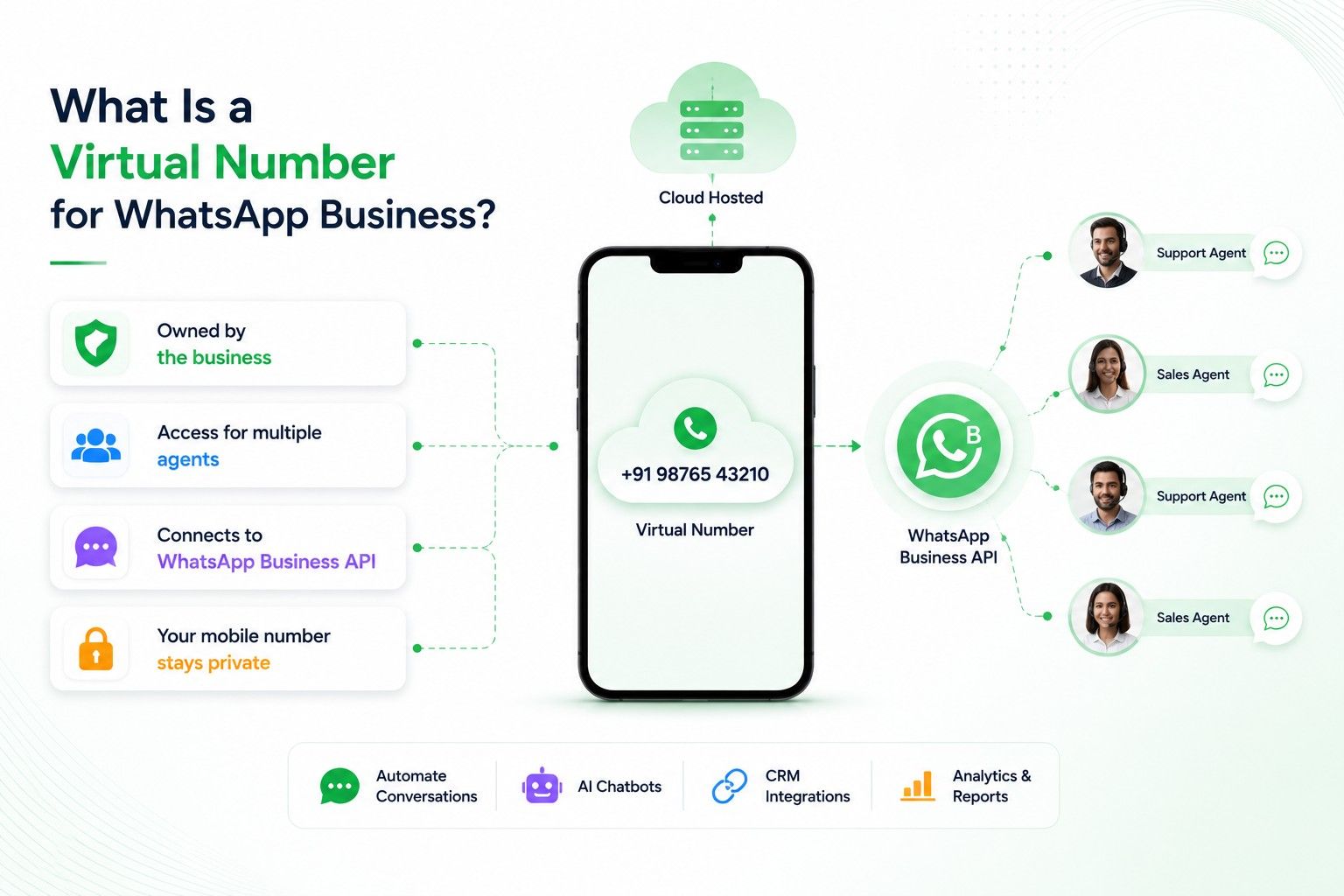
For businesses, this distinction matters enormously. Instead of running customer conversations off someone’s personal mobile — mixing office chats with wedding invites and family group forwards — a virtual number for WhatsApp business gives you a dedicated, professional line that:
- Stays owned by the business, not an individual employee
- Can be accessed by multiple support and sales agents at once
- Connects directly to the WhatsApp Business API, unlocking automation, chatbots, and CRM integrations
- Keeps your actual mobile number completely private from customers
In short, it’s the foundation every serious WhatsApp Business setup in India is built on.
Why Every Indian Business Needs a Virtual Number for WhatsApp
India isn’t just a WhatsApp market — it’s the WhatsApp market. The platform counts over 500 million monthly active users in India, more than any other country in the world, and roughly 98% of the country’s internet users are on WhatsApp in some form. For an India-focused business, that’s less “nice to have” and more “primary customer channel.”
Once WhatsApp becomes core to how you sell, support, and notify customers, using a founder’s or employee’s personal number breaks down fast:
| Reason | Why it matters for an Indian business |
|---|---|
| Professionalism | Personal and business conversations stay cleanly separated |
| Team scale | Multiple sales and support agents can work off one virtual number for WhatsApp business India instead of forwarding chats around |
| Automation | Auto-replies, chatbots, and CRM sync are only possible through the WhatsApp Business API, which requires a dedicated number |
| Business continuity | The number stays with the company even when an employee leaves |
| Privacy | Owners and staff never have to hand out personal numbers to strangers |
| Trust and credibility | A consistent, verified business number with a green badge builds recognition over repeat interactions |
If you’re weighing virtual number for whatsapp India options for the first time, the decision usually comes down to one question: are you just messaging a handful of customers, or are you trying to run WhatsApp as a real growth and support channel? The moment it’s the latter, a virtual number stops being optional.
Virtual Number vs Personal Number for WhatsApp
| Factor | Personal WhatsApp Number | Virtual Number for WhatsApp Business |
|---|---|---|
| Ownership | Tied to an individual/employee | Owned by the business |
| Team access | One device, one person | Multiple agents via WhatsApp Business API |
| Automation | Manual only | Chatbots, auto-replies, drip campaigns |
| Analytics | None | Delivery, read, and response-rate reporting |
| Privacy | Personal number exposed to customers | Personal number stays hidden |
| CRM/ERP integration | Not possible | Fully supported via API |
| Scalability | Breaks down beyond a few hundred chats | Built for thousands of concurrent conversations |
How to Get a Virtual Number for WhatsApp Business in India
Getting a virtual number for WhatsApp business is simpler than most businesses expect. Here’s the process, step by step:
Step 1: Choose an official WhatsApp Business API provider Not every virtual number provider is created equal. Pick a company that is an authorised Meta partner or works directly with one — this is what determines whether your number actually passes verification, and whether it stays active long-term. This is where most cheap/free providers fail: their numbers get flagged before a business ever sends its first campaign.
Step 2: Complete business KYC You’ll typically need your business name, GSTIN or company registration, website, and basic contact details. This is standard practice across the industry and exists to keep the WhatsApp ecosystem spam-free.
Step 3: Select your number Choose a number format that fits your business — a standard Indian mobile-format number is the most common and trusted choice for a virtual number for whatsapp business india setup.
Step 4: Verify with WhatsApp WhatsApp sends a 6-digit OTP via SMS or voice call to the virtual number, which your provider hands over to complete verification.
Step 5: Connect to the WhatsApp Business API This is the step that actually unlocks value — linking the verified number to the API so you can add agents, build chatbot flows, set up broadcast lists, and integrate with your CRM or e-commerce platform.
Step 6: Set up your business profile and automation Add your display name, catalog, greeting messages, quick replies, and any chatbot flows before going live.
A good provider — like DGAS Skyworld’s WhatsApp Business API — handles most of steps 1, 4, and 5 for you as part of onboarding, so a business can go from signup to live messaging in days, not weeks.
Free vs Paid Virtual Numbers: What Actually Works
A free virtual number for WhatsApp sounds appealinVirtual Number for WhatsApp Business in India: The Complete 2026 Guideg, but it’s worth understanding the trade-off before you commit a business to one.
| Free Virtual Numbers | Paid, Verified Virtual Numbers | |
|---|---|---|
| Verification success | Frequently fails or gets flagged | Pre-checked and reliably verified |
| WhatsApp Business API compatibility | Usually unsupported | Fully compatible |
| Long-term reliability | Numbers get recycled, banned, or reassigned | Dedicated, stays with your business |
| Support | Minimal to none | Onboarding + ongoing support |
| Compliance | Often unclear origin/ownership | KYC-verified, policy-compliant |
For a one-off personal experiment, a free number might survive a few days. For a business that plans to run customer support, order updates, or marketing campaigns, an unverified number is a liability — a banned number mid-campaign means lost conversations, lost trust, and a scramble to re-verify a new one. Most Indian businesses that start with a free number end up migrating to a paid, verified virtual number for WhatsApp business within weeks anyway — it’s usually more cost-effective to start right the first time.
Virtual Number + WhatsApp Business API: Why They’re a Package Deal
A virtual number on its own is just a phone number. Its real power comes from what it’s connected to — and for any business beyond a handful of daily chats, that’s the WhatsApp Business API.
Here’s what the API unlocks once your virtual number is connected:
- Multi-agent shared inbox — your entire support/sales team works from one number without stepping on each other’s replies
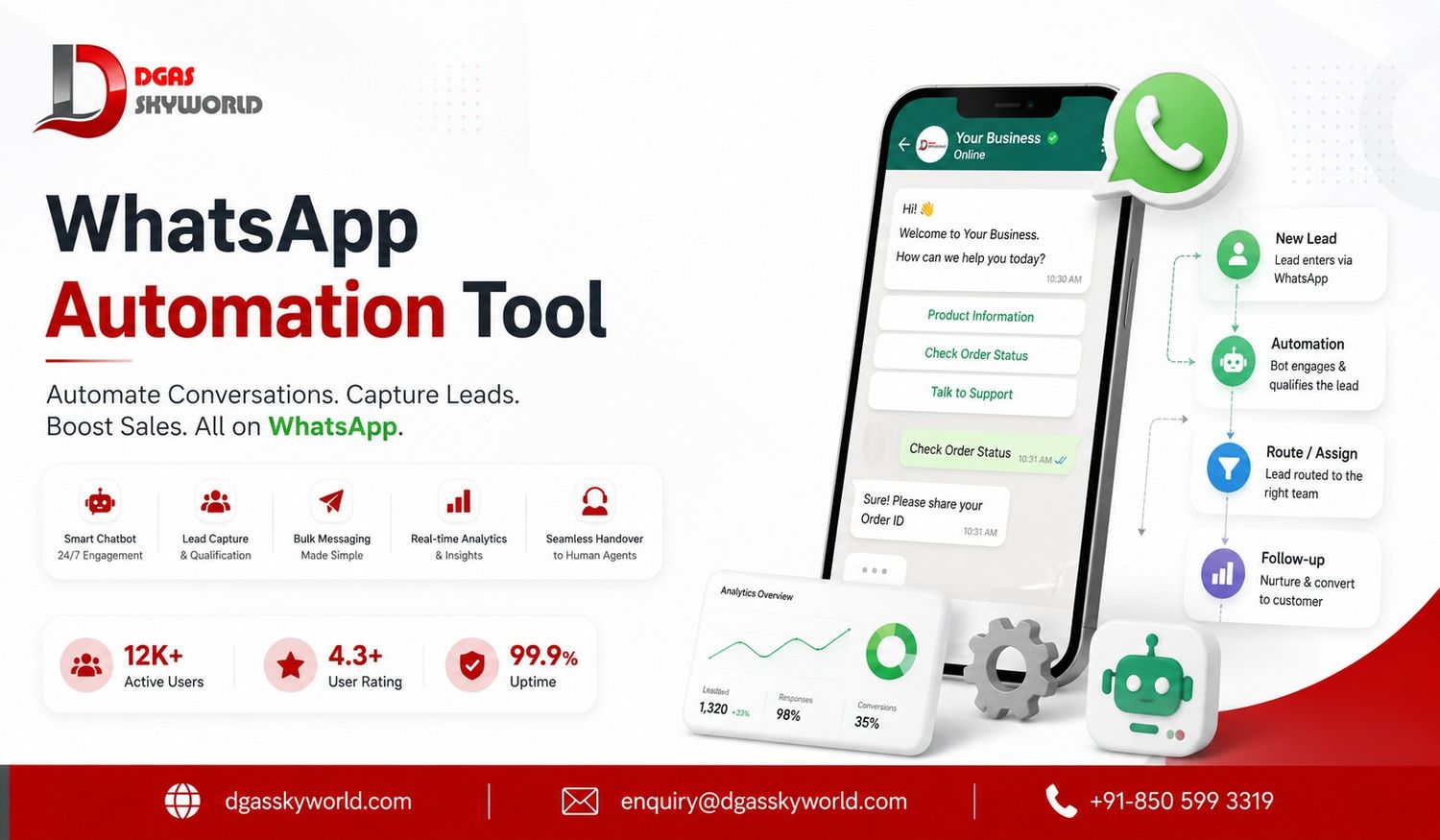
- AI chatbots and automation — instant responses, lead qualification, and FAQ handling without human involvement
- Broadcast messaging — order updates, offers, and reminders sent to segmented customer lists (within Meta’s messaging policies)
- Rich media and catalogs — product catalogs, images, and interactive buttons directly inside chat
- CRM and e-commerce integration — WhatsApp conversations sync with your existing sales and support tools
- Analytics — delivery rates, response times, and conversation-level reporting that the free WhatsApp Business app simply doesn’t provide
If you’re evaluating providers, read our detailed breakdown of what WhatsApp API is and how it works for the full picture before you buy.
What Is Omnichannel CPaaS — and Why It Supercharges WhatsApp Automation
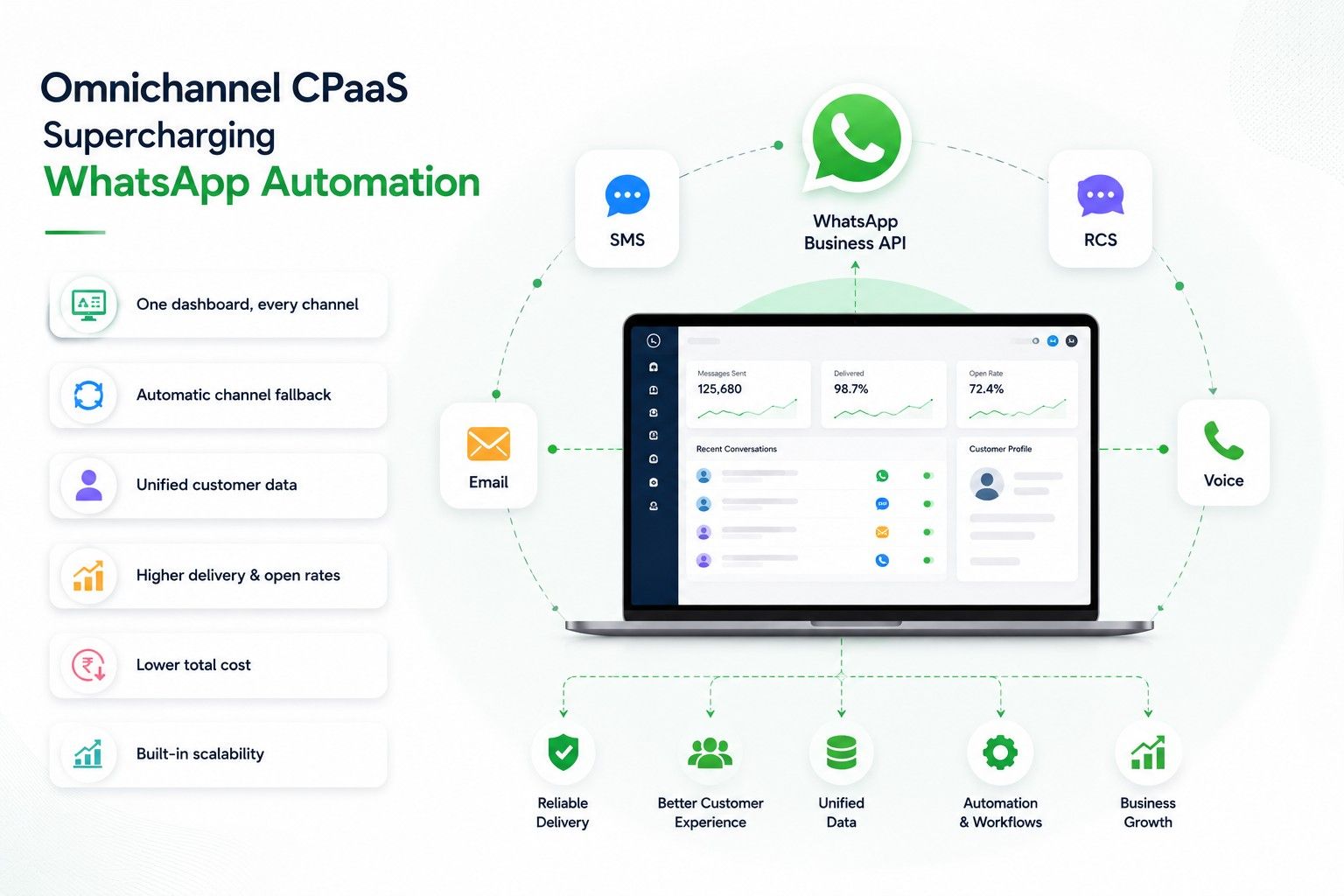
Here’s what most guides on virtual numbers don’t tell you: WhatsApp rarely works in isolation. A customer might open a WhatsApp chat but not have it saved, need an SMS OTP as a fallback, or need a voice call for something time-sensitive. This is where omnichannel CPaaS (Communications Platform as a Service) comes in — a single platform that unifies WhatsApp, SMS, RCS, voice, and email under one dashboard and one set of APIs.
Benefits of an omnichannel CPaaS approach to WhatsApp automation:
- One dashboard, every channel — manage WhatsApp Business API, SMS API, RCS messaging, Enterprise voice calls, and email API from a single interface instead of stitching together five separate tools
- Automatic channel fallback — if a WhatsApp message isn’t delivered or read within a set window, the system can automatically retry over SMS or RCS, so no customer notification is ever lost
- Unified customer data — every interaction across channels feeds the same customer profile, so your chatbot and agents always have full context
- Higher delivery and open rates — routing OTPs, alerts, and campaigns through the best-performing channel for that moment, rather than defaulting to one channel for everything
- Lower total cost — one CPaaS contract and one integration effort instead of managing separate vendors for messaging, voice, and email
- Built-in scalability — as a business grows from WhatsApp-only outreach into voice IVR, bulk SMS, or AI chatbot support, the infrastructure is already there
This is precisely the gap a standalone virtual-number vendor can’t close — and exactly where an Indian CPaaS-native platform like DGAS Skyworld adds value beyond just issuing a number.
Real Use Cases: How Indian Businesses Use Virtual WhatsApp Numbers
E-commerce and D2C: Order confirmations, shipping updates, and abandoned-cart reminders sent automatically the moment a customer takes (or doesn’t take) an action.
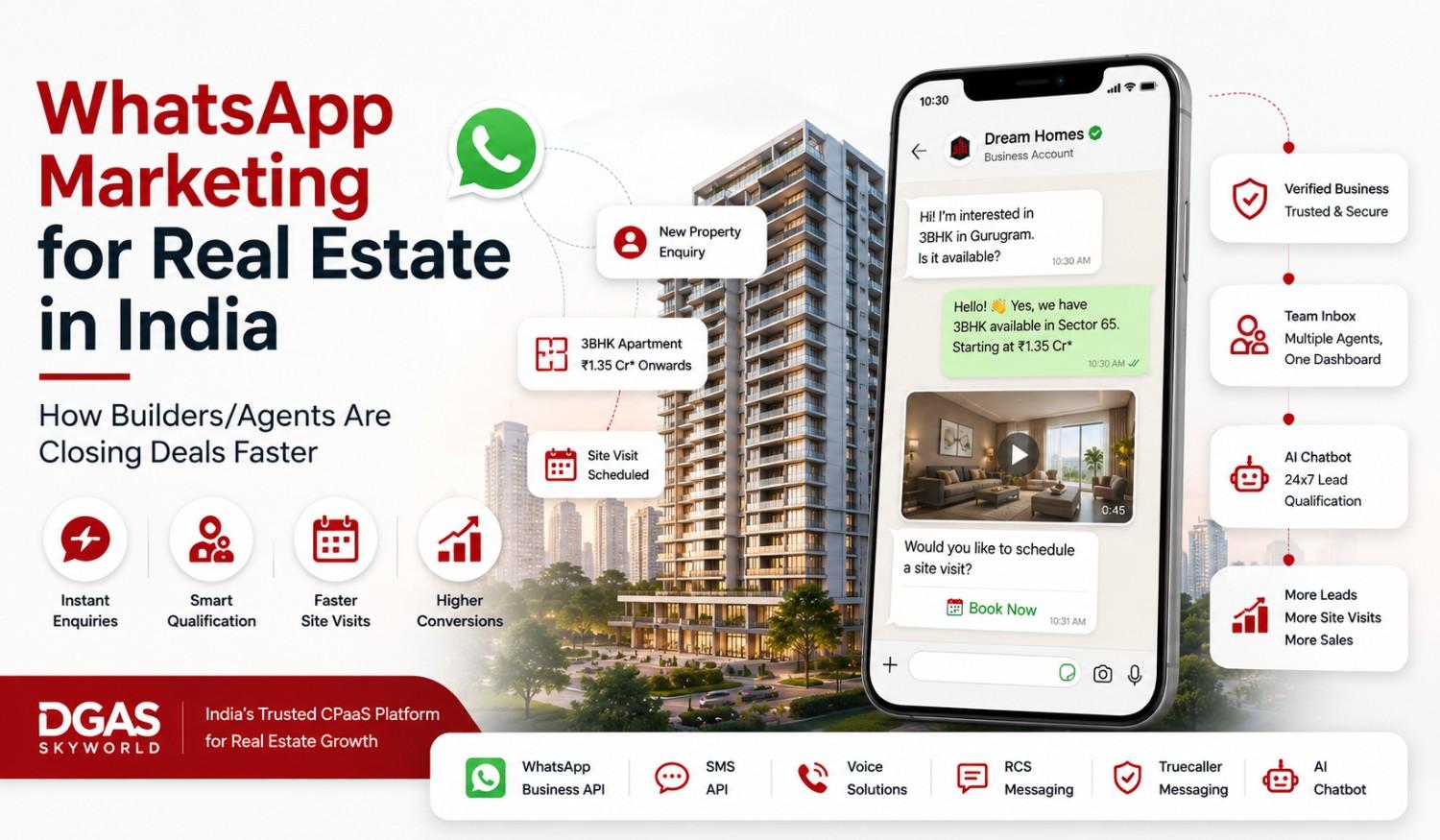
Real estate: Property inquiries, site-visit scheduling, and payment reminders — all traceable to campaign source when the virtual number is linked to Meta ad click-to-WhatsApp campaigns. (If you’re running real estate campaigns, our guide on WhatsApp marketing for real estate in India covers this in depth.)
Healthcare: Appointment confirmations, prescription reminders, and follow-ups sent confidentially without exposing a doctor’s or clinic staff’s personal number.
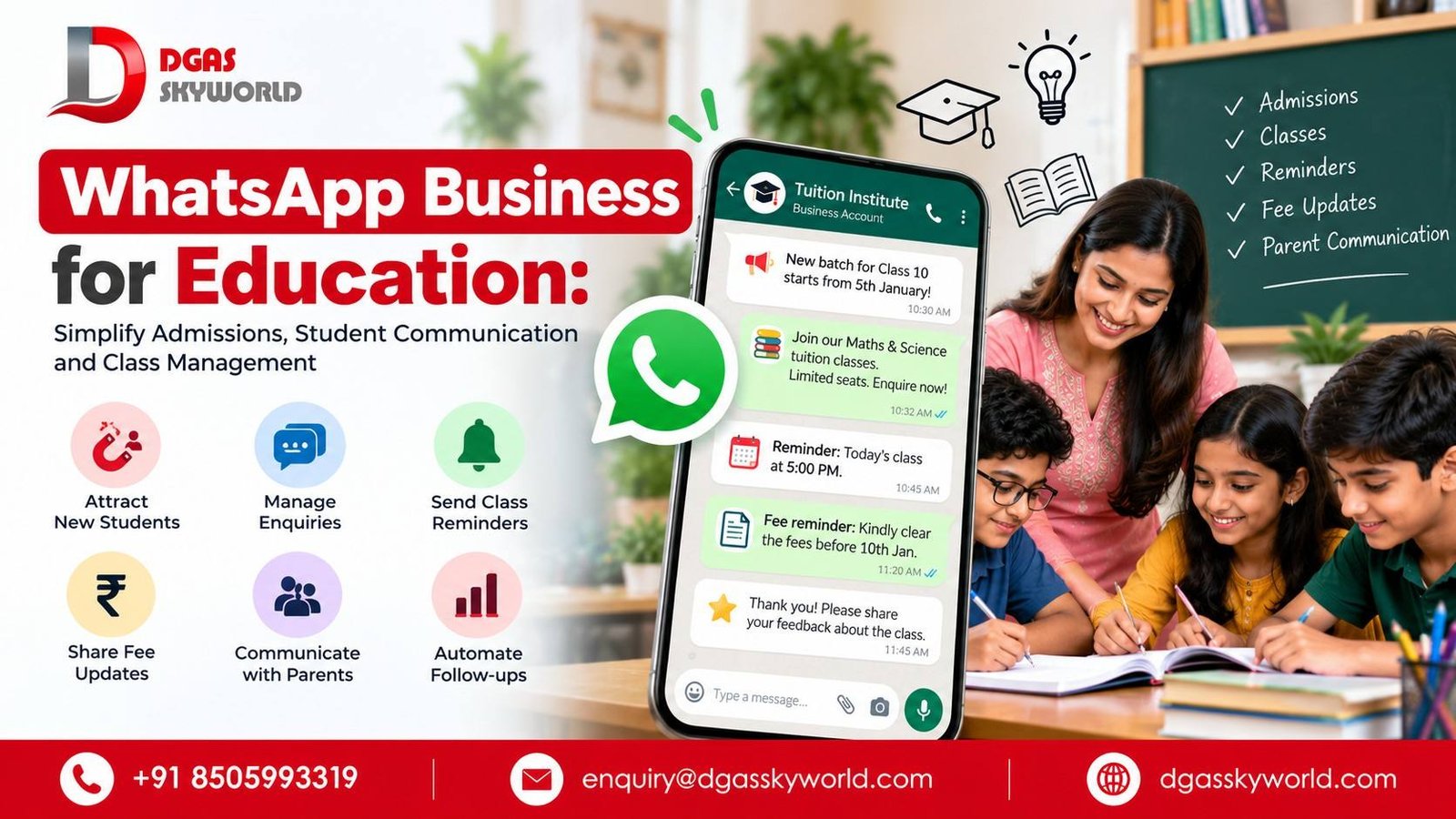
Education: Fee reminders, exam schedules, and result notifications sent to thousands of parents and students at once through a verified institutional number.
Banking and financial services: Transaction alerts, statement delivery, and support — channels where a verified, compliant business number is not just useful but expected.
Government bodies and PSUs: Citizen service updates, grievance redressal, and public information campaigns run through a single, auditable, government-verified WhatsApp number — a use case DGAS Skyworld has direct, hands-on experience delivering.
Logistics and retail: Delivery status updates and customer support queries routed to the right team without a single customer ever seeing a personal mobile number.
Compliance and Data Security for Indian Businesses
Before you buy a virtual number for whatsapp India, a few compliance basics are worth knowing:
- KYC is mandatory. Legitimate providers will always ask for business registration/GST details before issuing a number — this is what protects the number (and your business) from being flagged.
- Meta’s messaging policy governs outbound messages. Promotional messages outside the 24-hour customer service window must use pre-approved message templates; this applies regardless of which provider issues your number.
- Opt-in matters. Customers should have consented to be messaged before you send marketing communications — this protects your number’s quality rating as much as it protects the customer.
- Data hosting matters for regulated industries. Banking, healthcare, and government use cases in particular should confirm where conversation and customer data is stored and how it’s secured.
- Virtual numbers themselves are legal in India when sourced through an authorised, compliant provider — the risk isn’t the number type, it’s using an unverified or non-compliant source.
Why DGAS Skyworld Is a Trusted Virtual Number & WhatsApp API Partner in India
DGAS Skyworld has been building enterprise communication infrastructure in India since 2017 — and unlike global platforms that serve dozens of countries, DGAS operates exclusively within India, which means every product decision, compliance check, and support workflow is built around Indian business needs from the ground up.
DGAS Skyworld provides a verified virtual number for WhatsApp Business API, backed by a full omnichannel CPaaS stack:
- WhatsApp Business API — verified virtual numbers, multi-agent inboxes, and template management
- SMS API — transactional and promotional bulk SMS
- RCS Messaging — rich, branded messaging for Android’s native messaging app
- Enterprise Voice Solutions — IVR, bulk voice calls, and click-to-call
- Truecaller Messaging — verified business identity across the Truecaller network
- AI Chatbot — no-code conversational automation across channels
- Email API — transactional and bulk email delivery
Trusted by Government Bodies, PSUs & Leading Enterprises
What sets DGAS Skyworld apart isn’t a claim — it’s a track record. DGAS has been the preferred WhatsApp Business API partner for major government and public sector organisations across India, including:
- Agra Nagar Nigam
- Gujarat Council on Science and Technology
- Punjabi University, Patiala
- Indian Institute of Foreign Trade
- …and 10+ government and PSU projects successfully delivered in total
Beyond the public sector, DGAS Skyworld is also trusted by private enterprises across healthcare, banking, e-commerce, real estate, education, logistics, and retail — sectors where compliance, reliability, and data handling aren’t optional extras, they’re the baseline requirement.
For a business evaluating who to trust with a communication channel that touches every customer, that combination of government-grade vetting and private-sector scale is hard to match. Book a free demo or call the DGAS Skyworld sales team at +91-850 599 3319 to see how a verified virtual number and the full CPaaS stack can work together for your business.
Best Practices for Using Your Virtual WhatsApp Business Number
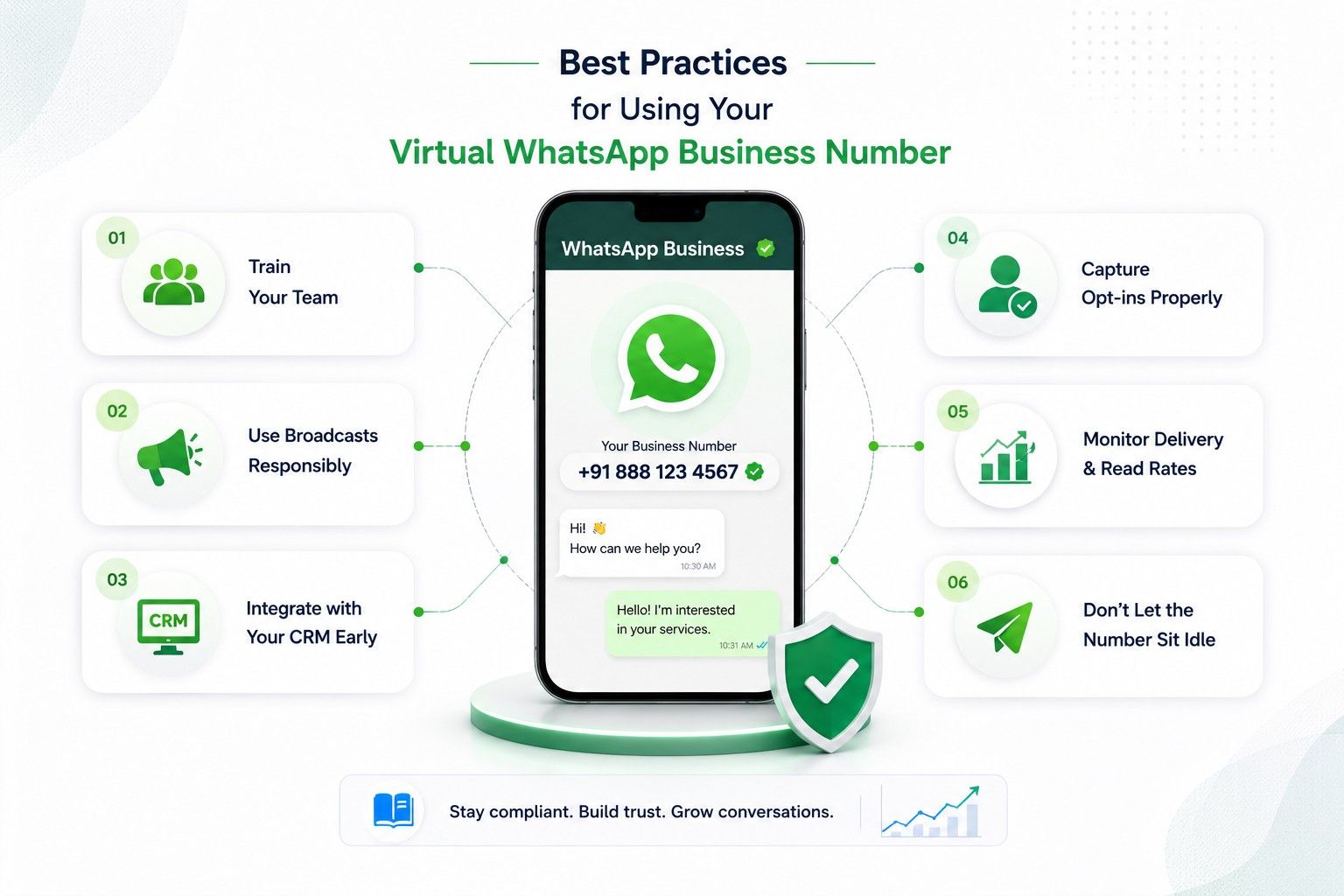
- Train your team — agents should know response-time expectations and tone guidelines before the number goes live.
- Use broadcasts responsibly — segment your audience and personalise messages instead of mass-blasting; it protects both engagement and your number’s quality rating.
- Integrate with your CRM early — connecting WhatsApp conversations to your existing sales pipeline from day one saves a painful migration later.
- Capture opt-ins properly — always get explicit consent before sending marketing messages.
- Monitor delivery and read rates — a sudden drop is often the first sign of a message quality or template issue worth investigating.
- Don’t let the number sit idle — an active, consistently used business number builds the message-quality signals that keep your API access healthy.
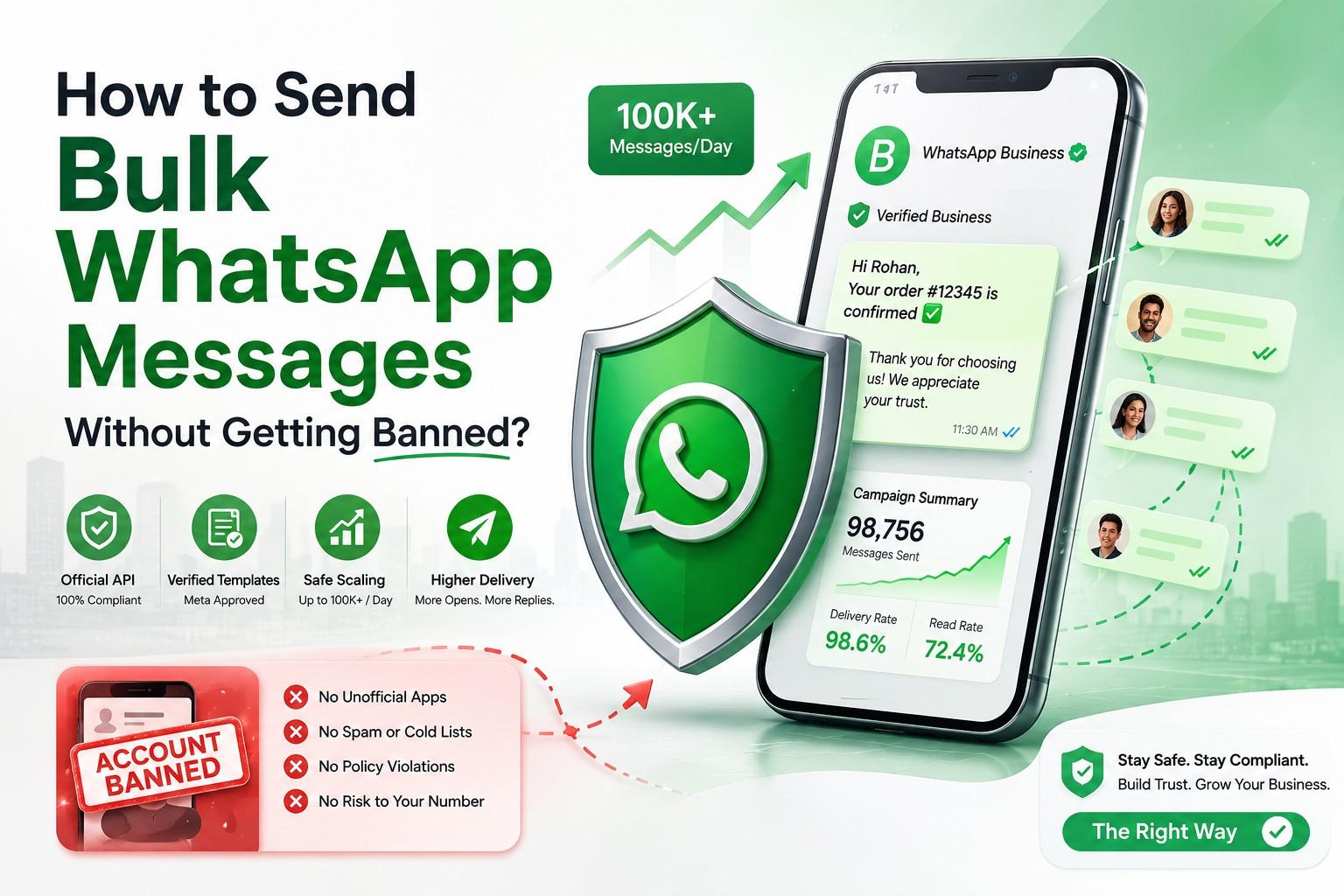
For a deeper look at staying compliant while scaling outreach, see our guide on how to send bulk WhatsApp messages without getting banned.
FAQs Related to Virtual Number for WhatsApp Business
1. What is a virtual number for WhatsApp business?
It’s a cloud-based phone number, not linked to a physical SIM, used to run a WhatsApp Business account separately from a personal number — typically connected to the WhatsApp Business API for team access and automation.
2. Is a free virtual number for WhatsApp reliable for business use?
Generally, no. Free virtual numbers frequently fail WhatsApp’s verification checks or get banned after initial use, since they’re often shared or previously flagged. A paid, verified number from an authorised provider is the safer long-term choice.
3. Can I use a virtual number for WhatsApp business in India legally?
Yes. Virtual numbers are legal in India when obtained through a compliant, KYC-verified provider. Businesses must still follow Meta’s WhatsApp Business messaging policies and standard opt-in practices.
4. Do I need the WhatsApp Business API, or is the free app enough?
The free WhatsApp Business app works for very small teams with light chat volume. Once you need multiple agents, automation, chatbots, or CRM integration, the WhatsApp Business API — connected to a virtual number — becomes necessary.
5. How is a virtual number for WhatsApp business India different from a global provider’s number?
An India-focused provider like DGAS Skyworld issues numbers built specifically for Indian KYC, compliance, and support norms, and typically has direct experience with Indian regulatory and enterprise requirements — something global, multi-country platforms don’t specialise in.
6. What documents are needed to get a virtual number for WhatsApp business?
Most providers require basic business KYC — business name, registration or GST details, and a website or business proof — before issuing and verifying a number.
7. Can a virtual number be used for both WhatsApp and other channels like SMS or voice?
With an omnichannel CPaaS provider, yes — the same business identity can be extended across WhatsApp, SMS, RCS, and voice, giving you one unified customer communication strategy instead of separate silos.